Our Origins
The Sacro Militare Ordine Costantiniano di San Giorgio — the Religious and Military Constantinian Order of Saint George — ranks amongst the oldest and most venerable chivalric orders of Europe. It unites military tradition, religious purpose, and dynastic continuity in a form without parallel upon the continent.
The Angeli Comneni as Custodians of the Order
Following the fall of Constantinople in 1453, a great many noble families of Greek and Balkan origin sought refuge in Western Europe. Among these were the Angelo Flavio Comneno — the Angeli — a Venetian noble family of Albanian descent, who claimed descent from the Angelos dynasty of the Byzantine Empire.
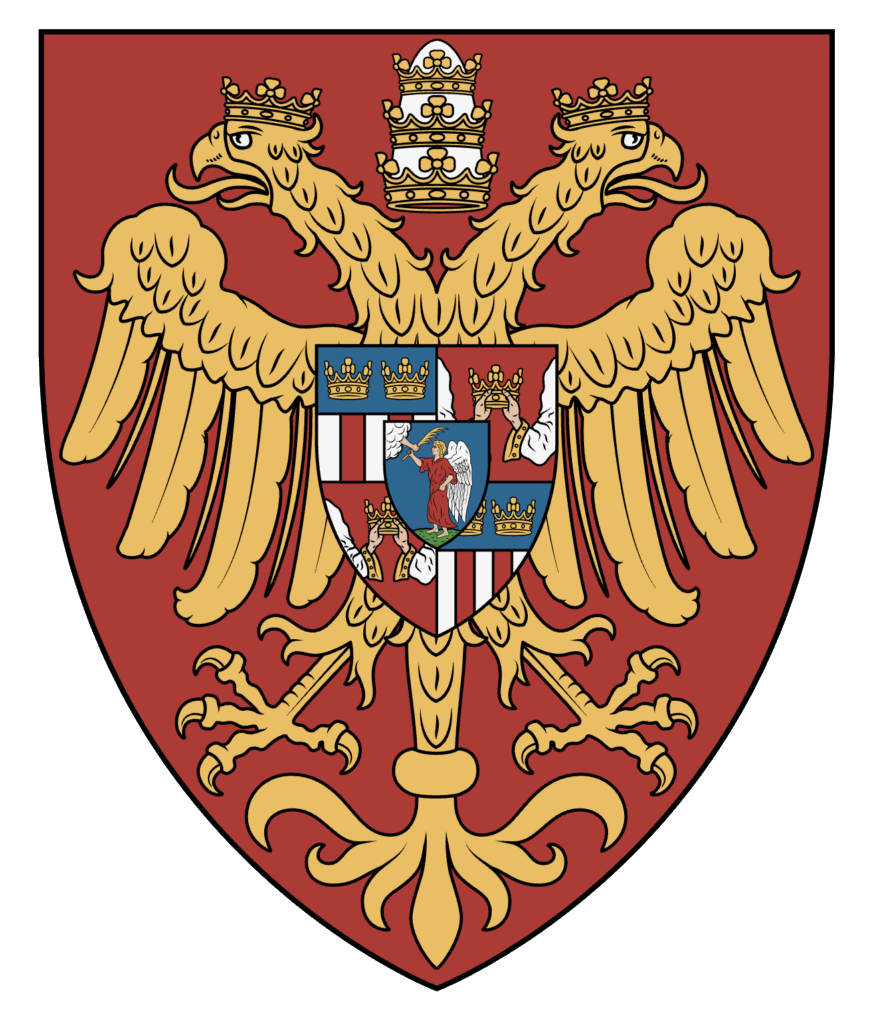
This family preserved and continued the Order. As early as the sixteenth century, members of the Angeli Comneni bore the title of Grand Master of the Constantinian Order. In Rome and in other European capitals, the Order enjoyed the support of popes and emperors. The first significant papal confirmation in the modern era was issued by Pope Julius III by means of the Bull Quod alias of 1551. In 1585, Pope Sixtus V explicitly recognised the Order’s character as a religio by means of the Brief Cum sicut accepimus — thereby conferring formal confirmation as a chivalric and religious community within the Church.
The Transfer of the Grand Mastership to the House of Farnese
The last representative of the Angeli Comneni line, Giovanni Andrea II Angeli (d. 1703), transferred the Grand Mastership in 1697–1698 to Francesco Farnese (1678–1727), Duke of Parma and Piacenza, with papal and imperial consent.
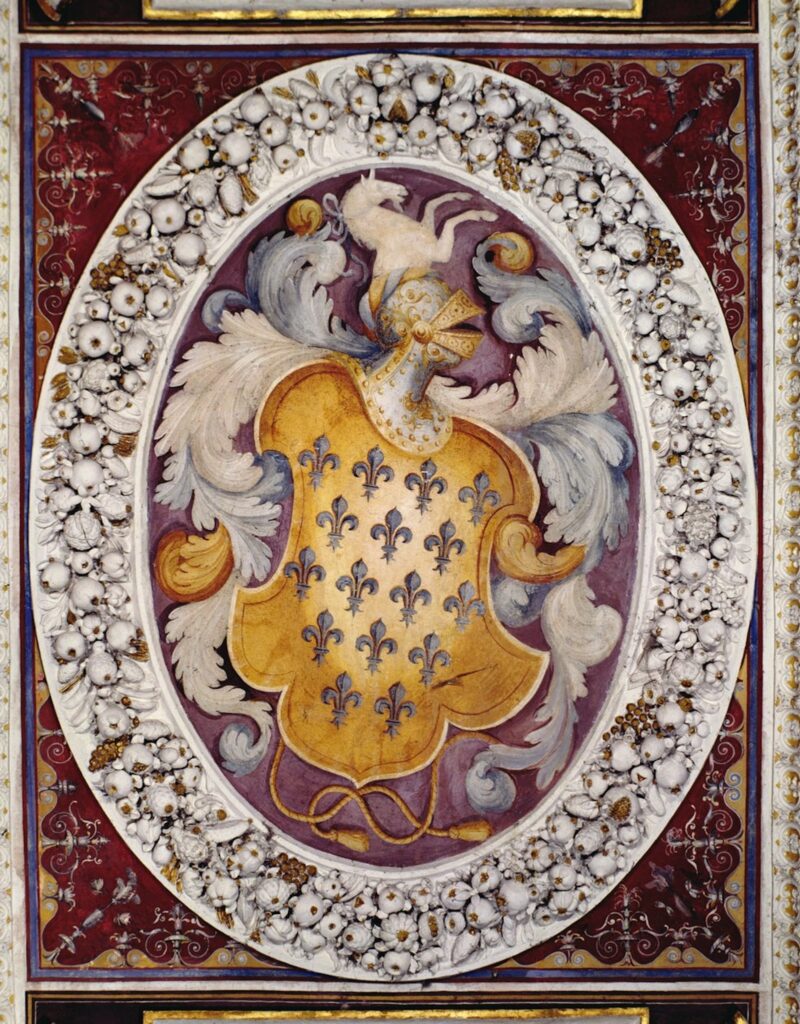
Pope Innocent XII approved it on 24 October 1699 by means of the Apostolic Brief Sincerae Fidei; Emperor Leopold I confirmed it by imperial decree; and Pope Clement XI reconfirmed the transfer in 1701 by means of the Brief Alias feliciter. These instruments established that the dignity of Grand Master constitutes an independent office, entirely separate from the Duchy of Parma. In 1705, Francesco Farnese reformed the Statutes of the Order; in 1706 these received the approval of the Holy See.
The Bull Militantis Ecclesiae (1718)
The present legal order of the Grand Mastership was established by the papal Bull Militantis Ecclesiae, issued by Pope Clement XI on 27 May 1718. This instrument determined that the dignity of Grand Master should descend according to male primogeniture within the House of Farnese, placed the Order formally under papal protection, and confirmed its privileges. The appointment of a Cardinal Protector by the Holy See ensured the Order’s ecclesiastical connection. Of decisive importance for the subsequent history of the succession is the strict distinction between territorial sovereignty and dynastic rights: an abdication or renunciation of a throne does not affect the Grand Mastership, which follows its own dynastic rules.
From the Transition to the House of Bourbon-Two Sicilies (1731) to the Present Day
With the death of Antonio Farnese (1679–1731), the House of Farnese became extinct in the male line. In accordance with the papal statutes of the Order and the law of Farnese succession, the Grand Mastership passed to Prince Charles of Bourbon (1716–1788), the eldest son of Elisabetta Farnese and King Philip V of Spain, who entered upon the Farnese inheritance in 1731.
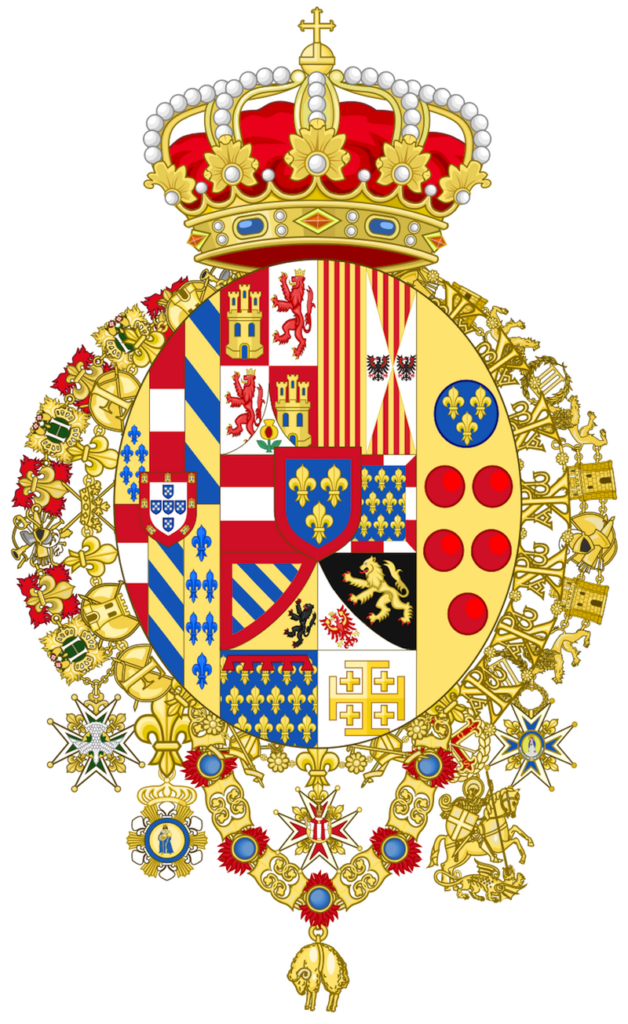
When, in 1734, he founded the Kingdom of Naples, and in 1759 issued the Pragmatic Sanction prior to his departure for Spain, the Grand Mastership became part of the patrimonial inheritance of the new House of Bourbon-Two Sicilies — as an independent legacy, distinct from the secular succession to the throne, transmitted according to the rules of Farnese primogeniture and the papal statutes of the Order.
Within the Kingdom of the Two Sicilies, the Constantinian Order developed a rich institutional tradition throughout the eighteenth and nineteenth centuries. The sovereigns of the House of Bourbon-Two Sicilies actively promoted the Order as an instrument of Christian chivalry and dynastic representation. Its members were engaged in charitable, ecclesiastical, and cultural initiatives across the Kingdom.
The legal status of the Order as a religious-military institution of the Church was reaffirmed and further defined by several papal acts. Both the Bull of 1699 and the Bull Militantis Ecclesiae of 1718 established the Grand Mastership as a distinct dynastic inheritance of the Farnese family—expressly separate from the secular succession to the throne and independent of any renunciations of royal rights.
The Grand Magisterium and the Grand Priory of the Order remained in Parma until 1768, although they were administered by the Grand Master from Naples. From 1768 onwards, the Grand Priory Church was located in Naples, while in Parma only a Vice-Grand Prior remained, with all assets—including the distinguished Church of the Steccata—continuing to be administered from Naples.
Following the unification of Italy in 1861 and the consequent end of the Kingdom of the Two Sicilies, King Francis II undertook a dual act of abdication: he renounced, in distinct and separate acts, both the throne of the Kingdom and the Grand Mastership of the Constantinian Order. This deliberate separation once again underscored the legal autonomy of the Grand Mastership in relation to temporal sovereignty.
Thereafter, the House of Bourbon-Two Sicilies continued its dynastic tradition and the Grand Mastership of the Constantinian Order in exile. The Grand Mastership remained part of the dynastic inheritance—unaffected by the territorial transformations on the Italian peninsula—inasmuch as it was transmitted in accordance with the papally approved statutes of the Order and did not depend upon recognition by any temporal state.
Nota bene: Should the dynasty of the Two Sicilies become extinct in the male line, the Crown (or the claim thereto) would pass to the nearest female descendant of the last male issue of Ferdinand IV and III, whilst the Grand Mastership of the Constantinian Order would devolve upon the next senior male line descending from the House of Farnese—namely, Bourbon-Parma. The grandmastership must therefore be regarded as the heir of the Farnese family, as is consistently recognised in papal documents.
Papal Privileges and the Life of the Order in the 20. century
In the twentieth century, the popes extended further privileges and confirmations to the Order. His Holiness Pope Saint Pius X, in 1911 and 1913, confirmed special rights for the clerical knights and supported the construction of the Magisterial Basilica of Santa Croce al Flaminio in Rome, completed in 1913 to mark the sixteen-hundredth anniversary of the Edict of Milan. Pope Benedict XV, in 1916, restored to the Order the church of Sant’Antonio Abate al Reclusorio in Naples. The Statutes of 1919 and the revised Statutes of 1934–1943 expressly confirmed that the dignity of Grand Master is reserved to the House of Bourbon as heir to the House of Farnese. During both World Wars, Knights and Dames of the Order served, alongside the Red Cross and other institutions, in the relief of civilian and military victims.
The Order and the Holy See in the 21. century
For the proper classification of the Order in relation to the Church and the Holy See, it is helpful to distinguish between different levels: canonical recognition in the strict sense, the treatment of historical orders under state law, and the actual lived practice within the Church.
First, it should be noted that the Holy See recognises only a limited number of orders of knighthood as its own or as directly recognised by it. This was reaffirmed in a statement issued by the Secretariat of State on 16 October 2012. That declaration refers exclusively to those orders which are directly connected with the Holy See. Its purpose is to provide clarity regarding this specific category; it does not, however, claim to offer a comprehensive classification or evaluation of all historically existing or legally relevant orders.
Alongside this, there exists a distinct state-law dimension, particularly in Italy. In this context, the Law of 3 March 1951 (Legge n. 178) is of central importance. This law regulates the conditions under which orders and decorations may be worn and publicly displayed within the Italian Republic. In doing so, it expressly distinguishes between state honours and so-called non-state orders, a category which includes historically dynastic orders.
The Constantinian Order is not recognised as a state order under this law; however, it is acknowledged as a historically existing non-state order and thereby falls within the legal framework governing the public use of decorations. Of particular significance is the fact that the law does not disregard such orders but explicitly includes them within its scope. In other words, the Italian State proceeds on the basis of their historical existence and provides a legal framework for their presence in the public sphere. While this does not constitute recognition in a strict state or ecclesiastical sense, it nonetheless represents a clear indication that such orders are regarded as historically established institutions and are duly taken into account within the legal order.
Against this background, the Vatican declaration of 2012 must also be understood. It was deliberately framed in general terms and omits references to national particularities—such as the Italian law of 1951—since such provisions have no direct applicability beyond their respective jurisdictions. This, however, does not imply that historically developed distinctions between different categories of orders have thereby been set aside. Rather, it reflects differing perspectives: a universal ecclesiastical clarification on the one hand, and national legal classifications on the other.
It is therefore important to emphasise that the absence of reference to a particular order in Vatican documents does not, in itself, permit any automatic conclusion as to a lack of ecclesial significance. The reality is more nuanced. The actual standing of a historically dynastic order is manifested above all in lived practice, including its continuous historical existence, its charitable and religious activities, and its relationships with members of the ecclesiastical hierarchy.
In the case of the Constantinian Order, such connections can be clearly demonstrated. Representatives of the House of Bourbon-Two Sicilies have on several occasions been received by the Roman Pontiffs, including Pope Benedict XVI in 2010 at Castel Gandolfo and Pope Francis in 2016 at the Apostolic Palace. Such audiences do not constitute formal acts of recognition; however, within the context of Vatican practice, they are understood as expressions of an existing relationship and of esteem, or of a mark of favour.
Furthermore, the participation of members of the Order—including clergy and Cardinals—in liturgical celebrations, for instance during the Jubilee Year 2025 at the Basilica of Saint Paul Outside the Walls, illustrates its tangible integration into the life of the Church.
The Grand Mastership Today
Today, the Grand Master is the supreme authority of the Religious and Military Constantinian Order of Saint George. In his person, the historic tradition of the Order is united with its present vocation in the service of the Christian faith, of the Church, and of active charity. As the foremost representative of the Order, the Grand Master upholds its spiritual orientation, promotes its ecclesiastical and charitable initiatives, and embodies the continuity of its historic inheritance. The present 21st Grand Master is Prince Don Pedro, Duke of Calabria.