Charitable Engagement and Humanitarian Aid
The chivalric or military dimension of the Order, historically bound to its tradition, is today lived in a manner befitting the challenges of our times. It manifests itself above all in a spirit of solidarity within the immediate social surroundings of the Order’s members: in the support of those facing difficult circumstances, in the accompaniment of the sick, and in assistance to those in need. Concrete initiatives include Christmas food collections, relief services for the homeless, and support for hospitals, orphanages, and care homes for the elderly. The Order understands its engagement not merely as financial assistance, but equally as personal support for those in difficult situations in life. The aim is to listen attentively to needs on the ground and to render assistance precisely where it is most urgently required.
The Guiding Principle: Caritas as the Heart of the Order’s Life
The Religious and Military Constantinian Order of Saint George regards itself as a neutral and apolitical chivalric-religious institution, promoting spiritual, cultural, humanitarian, and socio-charitable activities in accordance with Christian principles. It strives to act upon the world of today through neighbourly love — in areas such as the support of those threatened by poverty, exclusion, war, or the persecution of their faith, as well as in the promotion of culture as both material and intangible heritage.
This self-understanding is no mere declaration on paper, but shapes the daily life of the Order at every level — from the governance of the Grand Master down to the individual sections in the regions. In accordance with the Order’s statutes, the two central spheres of social action are hospital care and general charitable work. These two pillars form the institutional framework within which the entirety of the Order’s charitable endeavour unfolds.
Membership of the Order obliges one not only to observe religious and ethical principles, but expressly to render active service to one’s neighbour. Upon admission to the Order, members undertake to commit themselves to all works of mercy towards their fellow man. This obligation is no abstract formula, but is lived out through concrete projects, charitable campaigns, voluntary service, and institutional partnerships with Caritas, parishes, hospitals, and international organisations.
The Attitude of the Grand Master: Service as a Personal Vocation
The reigning Grand Master, H.R.H. Don Pedro of Bourbon-Two Sicilies and Orléans, Duke of Calabria, Count of Caserta, embodies the Order’s charitable calling in an exceptional manner through his personal conduct. He personally attended to the provision of aid for those in need during the Covid pandemic; drove himself to Ukraine to deliver one of the ambulances donated by the Constantinian Order to support the treatment of the war-wounded; undertook a pilgrimage to Caravaca de la Cruz with the Order in the Jubilee Year 2024; and visited communities in Sibayo, Caylloma, and Arequipa in Peru to support disadvantaged individuals who, thanks to the Order’s assistance, are today receiving vocational training.
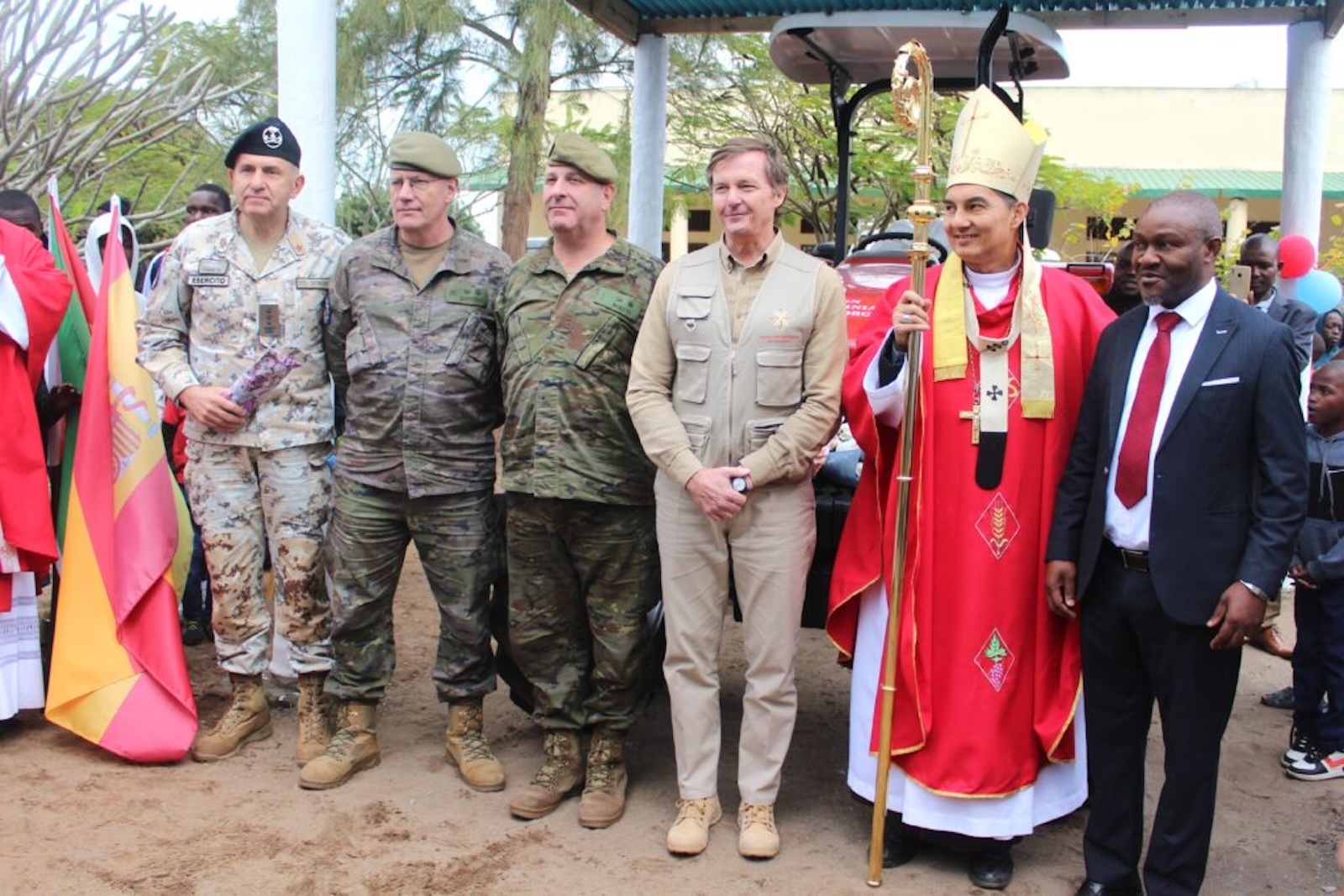
Don Pedro has expanded the altruistic and solidary work of his late father exponentially, such that the Constantinian Order now carries out its charitable activities in Germany, Austria, Brazil, Spain, the United States, France, Italy, Liechtenstein, Luxembourg, Peru, Portugal, the United Kingdom, and Sweden. He visits the national commissions of his Order in person, well aware that his presence visibly strengthens and advances the Order’s charitable mission. This personal style of leadership shapes the entire culture of the Order: social engagement is not a peripheral concern, but the very core of its purpose.
The Institutional Foundation: The Fondazione San Giorgio Italia ETS
The Order’s charitable work in Italy is supported by a purpose-founded non-profit organisation. The Fondazione San Giorgio Italia was established by the reigning Grand Master Don Pedro of Bourbon-Two Sicilies as President of the Fundación Orden Constantiniana de San Jorge, with its seat in Madrid, and is registered as a non-profit organisation in the Register of the Third Sector. It is dedicated exclusively to activities of social benefit: the care of vulnerable persons — elderly, sick, poor, and disabled individuals, as well as children — providing them with moral and material support. In addition, it promotes academic and research initiatives, safeguards Italy’s historical and cultural heritage, and disseminates cultural and educational values through editorial, popular-scientific, and artistic activities of social interest.
The President of the Foundation is H.E. Prince Don Flavio Borghese; the Vice-President is Count Antonio Zanardi Landi; a member of the Board is H.R.H. Prince Jaime de Borbón-Dos Sicilias, Duke of Noto and Grand Prefect of the Order; Counsel and Director General is Nobile Alessandro Pompili, Baron of Denny. The Foundation operates primarily through the voluntary, unpaid commitment of individuals who contribute their time, resources, and expertise, and serves as the operational arm of the Order for all charitable and social activities in Italy.
International Recognition: Consultative Status at the United Nations
The Order’s social engagement also receives formal recognition at the international level. Since the 1st of August 2011, the Order has enjoyed special consultative status with the Economic and Social Council of the United Nations (ECOSOC) — a distinction granted in recognition of the numerous humanitarian activities undertaken worldwide on behalf of the most destitute. Furthermore, the Order has attained observer status with the United Nations Economic and Social Commission for Asia and the Pacific (UN-ESCAP), an important body in which 53 member states and 9 associate members of the Asia-Pacific macro-region are represented. This standing under international law confers upon the Order’s social work a dimension that extends far beyond local relief measures, and opens the possibility of shaping global agendas.
Emergency Relief during the COVID-19 Pandemic
The first great test of recent history was the COVID-19 pandemic. The Order responded to the crisis with a co-ordinated, multi-layered effort. Under the leadership of Prince Pedro, as President of the Royal Council of Spanish Chivalric Orders, the Order co-ordinated a comprehensive solidarity initiative: together with Caritas and various soup kitchens and charitable organisations, protective equipment, medical devices, medicines, and educational materials — including tablet computers — were delivered to hospitals, care homes, and destitute families throughout Spain, so that children from impoverished families might participate in remote learning.
In Southern Italy, the Order placed a particular focus on structurally weaker regions. The charitable campaign of the Order’s chapter concentrated on Abruzzo, Basilicata, Calabria, Campania, Molise, Apulia, and Sicily, in order to assist hospitals with fewer resources in augmenting their intensive care capacities. In Calabria, the Order donated the specific sum of €30,000 to the Pugliese Ciaccio Hospital in Catanzaro for medical equipment and supplies for the intensive care unit. The then Grand Master emphasised on that occasion: “Every euro donated is a glimmer of hope and a small drop of life to help overcome this challenge.” This donation was earmarked for the establishment of intensive care units in the Calabrian regional capital — a region that is structurally amongst the most underserved in Italy.
Humanitarian Aid in the War in Ukraine
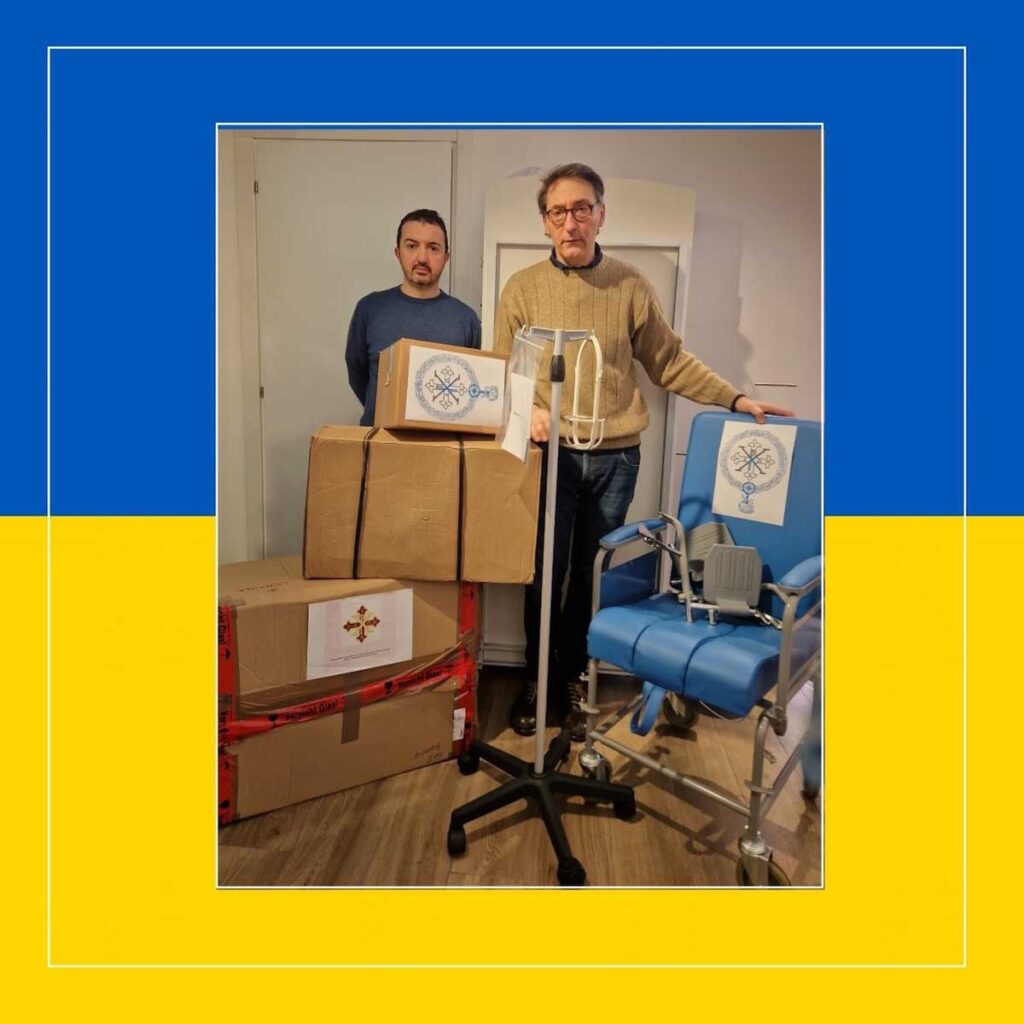
When war broke out in Ukraine in February 2022, the Order swiftly mobilised humanitarian assistance. Through its charitable organisation, the Constantinian Order Charity Onlus, the Order provided immediate aid for refugees and the affected civilian population — in a context already severely burdened by two preceding years of pandemic, in which social hardship and marginalisation had already intensified. Particularly symbolic was the personal commitment of the Grand Master: Prince Pedro himself drove one of the ambulances donated by the Order to Ukraine, in order to support the care of the war-wounded — an act that impressively embodies the ideal of the active knight in the present day.
Support for Christian Communities in the Holy Land
Beyond acute crises, the Order also devotes itself to enduring humanitarian hardships. In the context of the Jubilee Year 2025, the Fondazione San Giorgio Italia ETS directed the net proceeds of its charitable gala dinner towards the Latin Patriarchate of Jerusalem, in order to support the Christian population in the Holy Land. The difficult economic circumstances of many Christian families in the region hamper access to fundamental resources, including education, which is indispensable for the future of the younger generation. This initiative unites, in characteristic fashion, the religious identity of the Order with concrete social solidarity — in one of the oldest and simultaneously most presently troubled conflict zones in the world.
Disaster Relief following the Flooding of the River Crati in Calabria
In the face of regional natural disasters too, the Calabria Delegation demonstrated its capacity for immediate action. When the River Crati burst its banks and inundated large parts of Calabria, the Delegation placed itself without delay at the side of the affected population, supporting the solidarity network of Caritas, parishes, and voluntary organisations. The diocesan Caritas established collection points for essential materials: hygiene articles, mud-clearing equipment, spades, wellington boots, water pumps, and decontamination agents. The rapid response of the Delegation makes clear that the Order is present not merely within institutional structures, but immediately and flexibly in acute situations of emergency.
Medical Equipment for Hospitals in Calabria
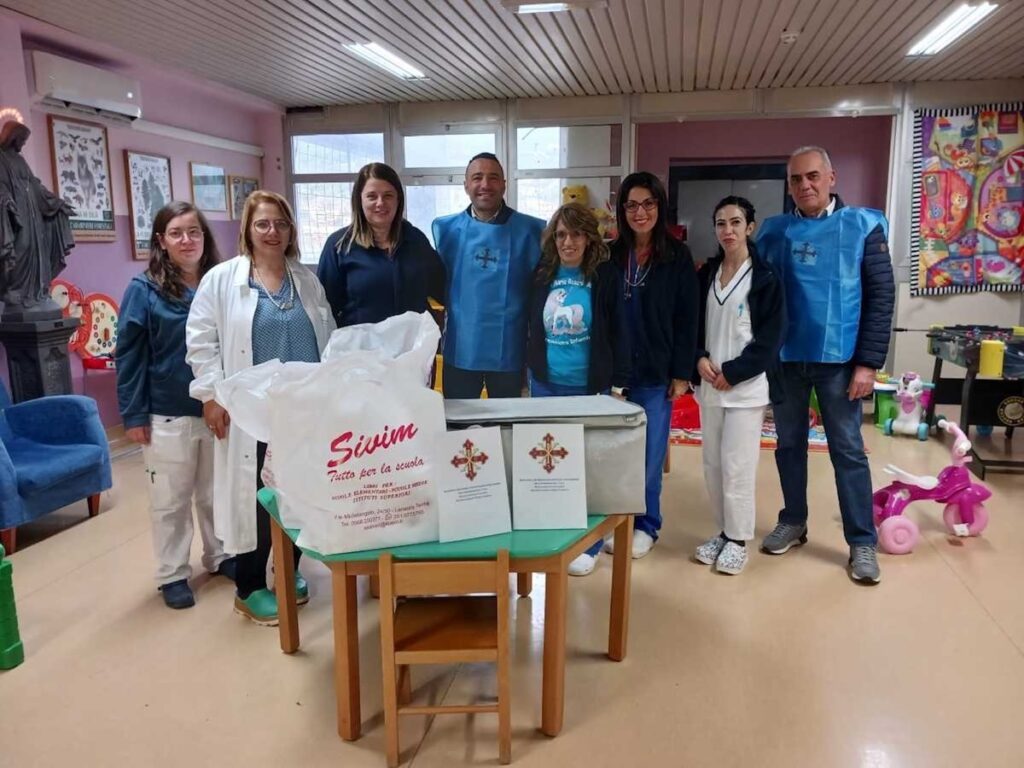
A particularly concrete and recurring field of social engagement by the Calabria Delegation is the support of local healthcare provision. On the 13th of March 2026, a deputation from the Crotone Section presented the Neonatology Department of the San Giovanni di Dio Hospital with a paediatric ECG monitoring device, funded by the proceeds of a charitable Burraco tournament organised by the knights, ladies, and postulants of the Section. The device enables nursing staff to monitor the cardiac functions of their small patients continuously and with precision, and to intervene immediately in critical situations — in some cases, saving lives. The hospital honoured the donation with an official certificate of merit, recognising it as “a shining example of social responsibility, civic spirit, and authentic commitment to collaboration with healthcare institutions.”
In early March 2026, the same Section donated footwear in various sizes to the Caritas of the Diocese of Crotone-Santa Severina for those in need.
Food Aid, Caritas Services, and Everyday Solidarity
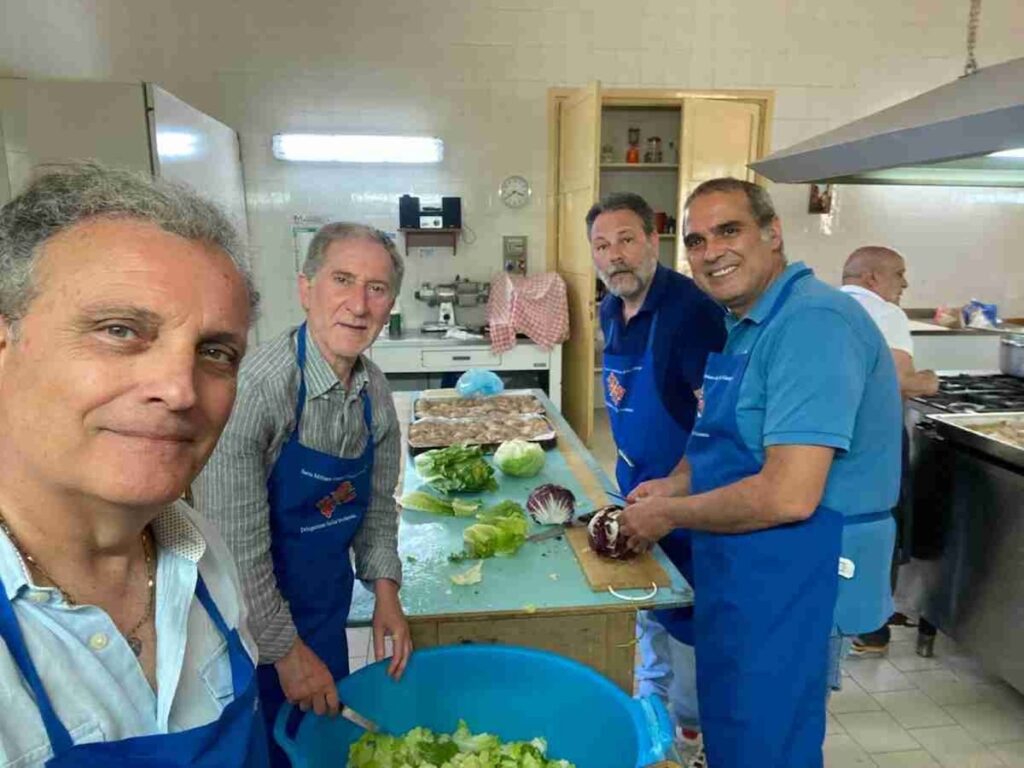
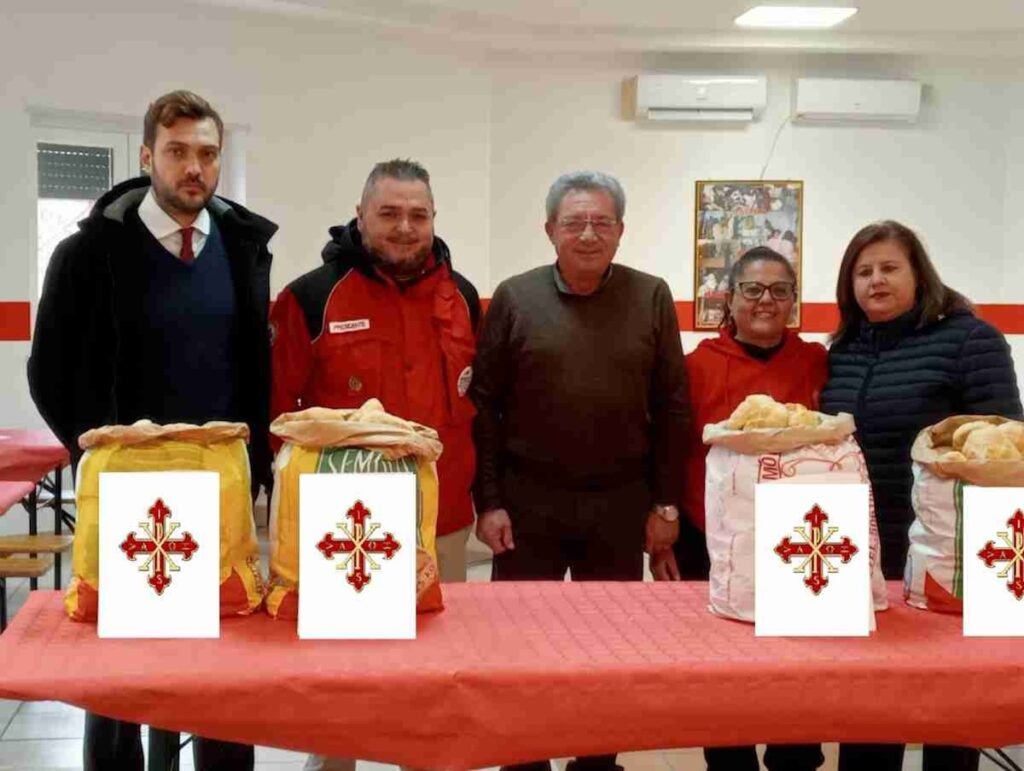
The Calabria Delegation is continuously engaged in the direct provision of assistance to those in need. In May 2024, knights, ladies, and postulants of the Lamezia Terme and Cosenza Sections rendered active service at the diocesan Caritas canteen and delivered food donations for the daily preparation of meals. The Director of the Caritas of the Diocese of Lamezia Terme, Don Fabio Stanizzo, thanked the Order for its visible closeness to the most destitute and joined in prayer.
On the feast of the Virgo Fidelis, the 21st of November 2024, the Delegation donated 50 hot meals to needy families cared for by the Caritas of the Parish of Santa Maria della Candelora in Reggio Calabria. Also in 2024, the Delegation delivered goods of daily necessity to a Ukrainian family whose young child was receiving treatment at the Polistena Children’s Hospital. During Advent 2024, the Lamezia Terme and Cosenza Section presented panettoni and items of clothing to needy families cared for by the parish community at the Church of San Giovanni Battista in Cosenza. The members of the Order observed the Advent season consciously as a time of expectation, lived out through commitment to solidarity with the most vulnerable. A generous individual donation by Knight Antonino Campolo made it possible, in December 2024, to deliver a considerable quantity of pasta to the Parish of Saint Francis of Assisi in Reggio Calabria, which provides for the most destitute on a daily basis.
Events and Awareness-Raising
The Order’s social engagement is not exhausted by material assistance, but extends also to public awareness-raising. On World Autism Day 2025, the Delegation — on the initiative of the Catanzaro delegate, Knight Saverio Salerno — had the city monument “Il Cavatore,” the landmark of the city, illuminated in blue. The “Light It Up Blue” campaign connects global landmarks such as the Empire State Building in New York, the Cristo Redentor in Rio de Janeiro, the Great Pyramid of Giza, and the Arch of Constantine in Rome. Through this symbolic gesture, the Delegation made a statement in favour of the rights and social inclusion of individuals with autism spectrum disorders.
On the 29th of March 2026, the Delegation held an event day at the Parish of Santa Maria della Candelora in Reggio Calabria, under the motto “Donare è Condividere” (To Give is to Share), comprising the blessing of palms, Holy Mass, and a solidarity luncheon for the most socially vulnerable members of the community. Such events are characteristic of the Delegation’s approach of uniting liturgical celebration with charitable action — in keeping with the Order’s guiding principle that true chivalry consists not in combat, but in service.
Cultural and Academic Engagement as Social Responsibility
The Order’s social engagement encompasses also the preservation of historical and cultural memory, understood as a form of social responsibility. The Fondazione San Giorgio Italia ETS concluded a three-year framework agreement with the Department of Humanities and Cultural Studies of the Università Luigi Vanvitelli (Campania) for the exploration, cataloguing, and inventorying of the historical archive collection of the Constantinian Order held in the State Archive of Naples. This collection comprises documents from the first half of the eighteenth century to the twentieth century, shedding light on important cultural, historical, and academic aspects of the Order. The Foundation has allocated €30,000 for this research project. Throughout its history, the knights and ladies of the Order have likewise actively participated, alongside the International Red Cross and the Order of Malta, in supporting the victims of both World Wars.
Networking and Inter-Regional Collaboration
The charitable work of the Calabria Delegation is also embedded within broader, supra-regional contexts. The Delegations of Naples and Campania, Calabria, and Apulia and Basilicata came together in spring 2026 for a first joint inter-delegational chapter, with the aim of strengthening mutual solidarity and co-operation. The meeting in Melfi, held under the guiding theme “In actione contemplativi,” took place in the spirit of Lent as a time of listening, grace, and conversion — and was intended to realign the missionary commitment of the members. This networking demonstrates that social engagement does not take place in isolation within individual sections, but forms part of a broader movement that mutually inspires, co-ordinates, and strengthens itself.
The social engagement of the Constantinian Order, led by the Calabria line, is multi-layered, consistent, and deeply rooted in the religious identity of the Order. It ranges from the presentation of a paediatric cardiogram device in a Calabrian hospital ward, through the personal efforts of the Grand Master in the flood-stricken areas of Valencia, to the support of Christians in the Holy Land and the digitisation of historical archives in Naples. The Order’s Foundation works with volunteers who contribute their time, resources, and expertise, and regards itself as the voice and pillar of the Order’s social concerns. It is likewise engaged in the preservation of cultural heritage and the promotion of education and research through cultural events and voluntary endeavour. The guiding aspiration is always: Servire e non servirsi — to serve, and not to be served. True chivalry consists not in power, but in humility; not in combat, but in service.
In the humanitarian sphere as well, the Order engages itself to the best of its ability. Activities are concentrated above all upon targeted relief measures in response to specific crisis situations. As the Order does not possess its own extensive operational structures, support is frequently rendered through the collection of funds and their onward transmission to internationally active relief organisations such as the Red Cross or Caritas Internationalis. In keeping with the principle of engagement in close proximity, the Order directs its particular attention to crises in those regions where its commissions and delegations are present. During the movements of refugees arising from the Yugoslav Wars from 1992 onwards, and during the crisis in the Middle East that has persisted since 2011, members rendered concrete assistance and accompanied numerous individuals on their journey to safety. Natural disasters have likewise become an important field of charitable activity. In times of grave trial, the Order stood at the side of those affected with active solidarity — as after the earthquake at Assisi (1997), the earthquake at L’Aquila (2009), and the earthquake at Amatrice (2016), as well as in the face of the continuing hardship arising from the war in Ukraine.