The Legend of the Order’s Origins
Our Order ranks amongst the most venerable chivalric institutions of the Christian world. Its spiritual inspiration is intimately linked to the figure of Emperor Constantine the Great (†337), whose victory at the Milvian Bridge in 312 is regarded as a decisive turning point in European and Christian history.
Constantine and the Sign of the Cross (AD 312)
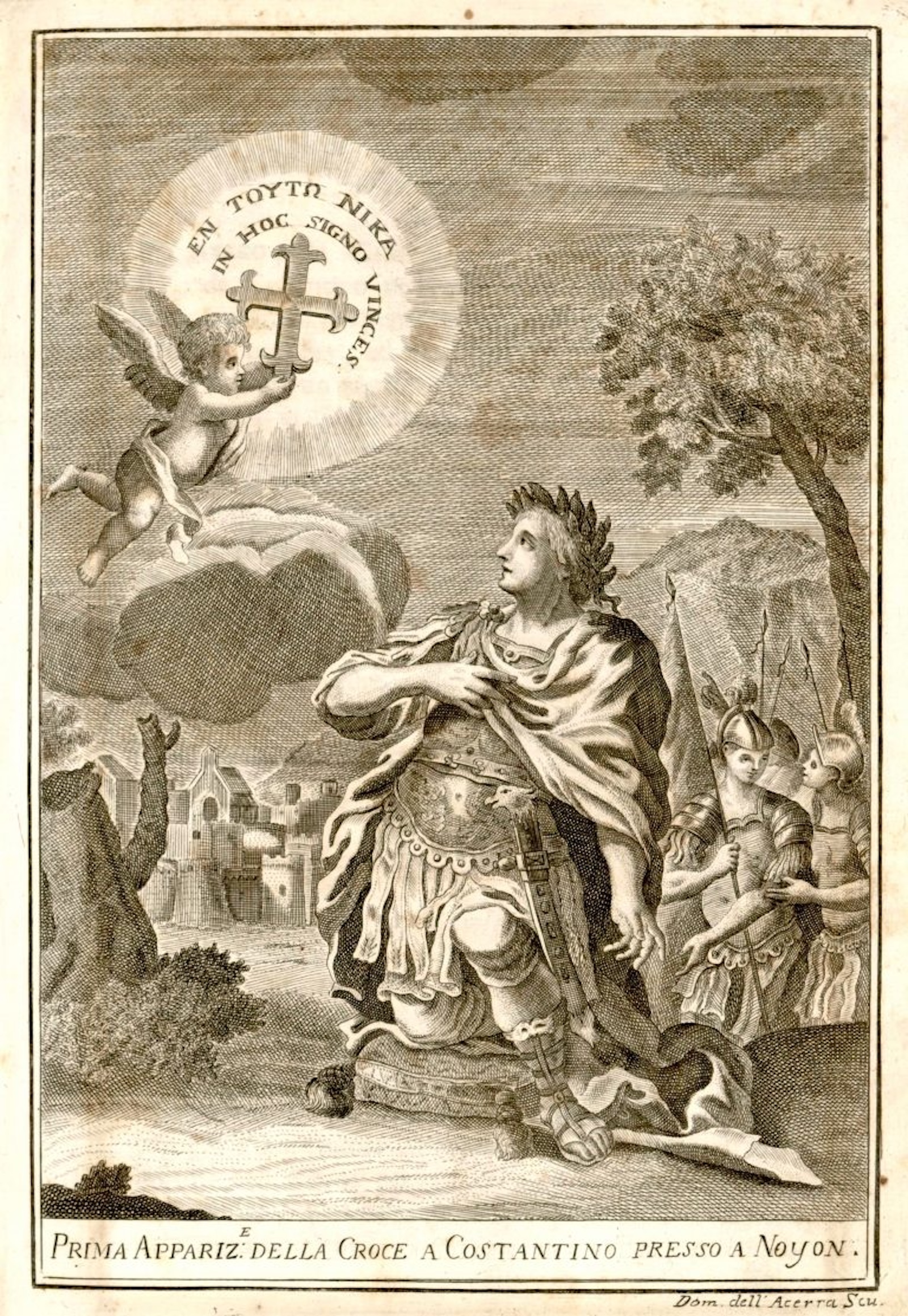
The Christian writer Lactantius († after 317) records that, prior to the Battle of the Milvian Bridge in 312—in which Constantine defeated his rival Maxentius—the emperor ordered a sign of Christ to be placed upon the shields of his soldiers. This emblem—the so-called Christogram (Chi-Rho), formed from the Greek initials of the name of Christ—soon became one of the most significant symbols of the Christian imperial idea. Within ecclesiastical tradition, this sign came to be associated with Constantine’s conversion. Its connection with this event, as well as with the Edict of Milan (313), which profoundly shaped the history of Europe and beyond, endowed the Order with a distinctive prestige.
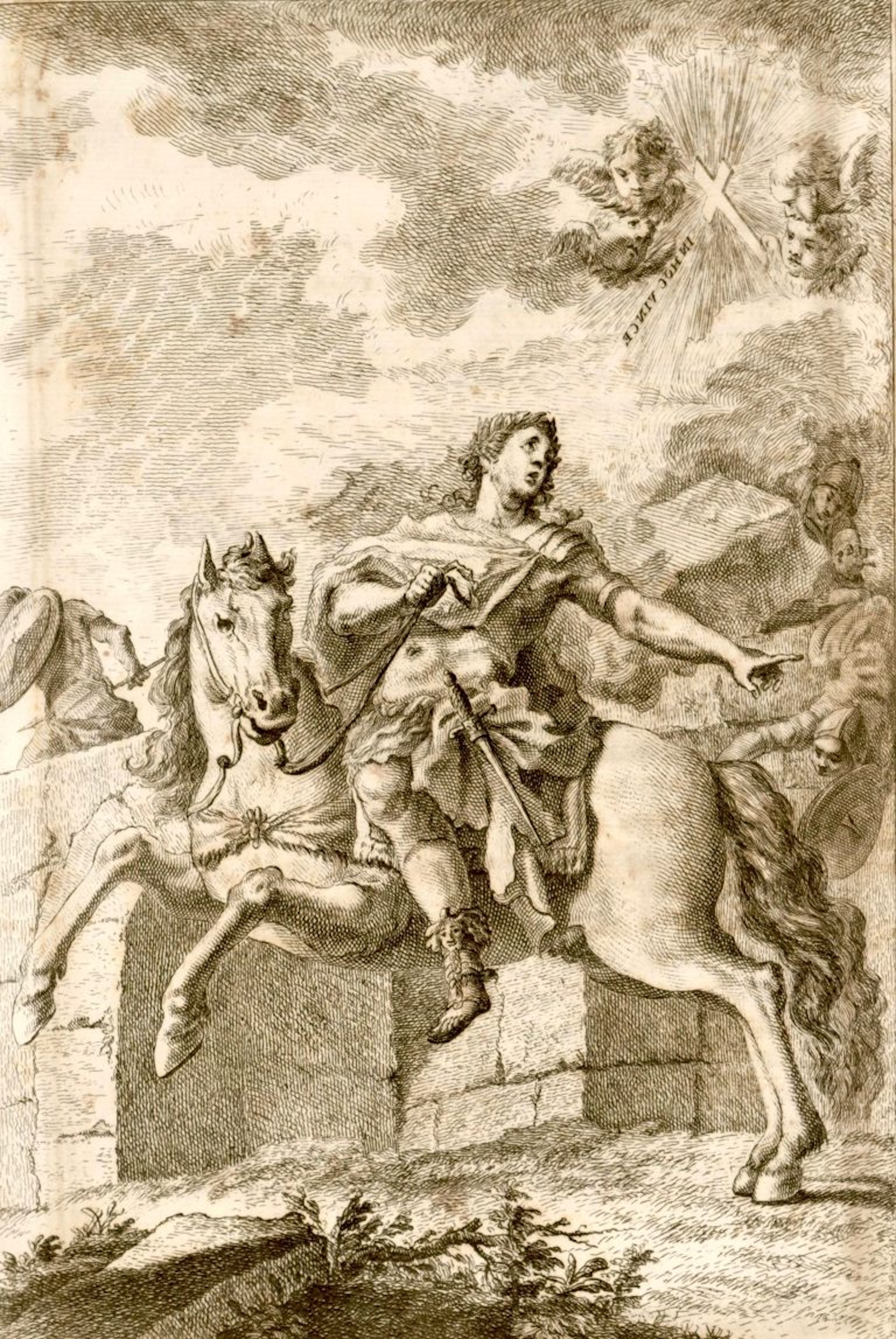
According to the Order’s tradition, its foundation is linked to the Constantinian sign—the labarum bearing the Chi-Rho—said to have been seen by Constantine the Great before the battle of 28 October 312. The Church historian Eusebius of Caesarea († c. 339) likewise transmitted accounts of Constantine’s vision prior to the engagement. Constantine’s victory over Maxentius secured his ascent as sole ruler of the Roman Empire and marked the beginning of its Christianisation. The Order understands itself as the custodian of this historical nexus between martial valour and the Christian faith.
The traditions concerning the Order’s origin, however, are not uniform. Certain early sources present it as a refoundation under Emperor Heraclius I (610–641), who is said to have established it following his victory over the Sasanian Persians and the recovery of the True Cross (629). Other traditions trace it directly back to Constantine himself.
The Labarum Guard and the Foundational Legend
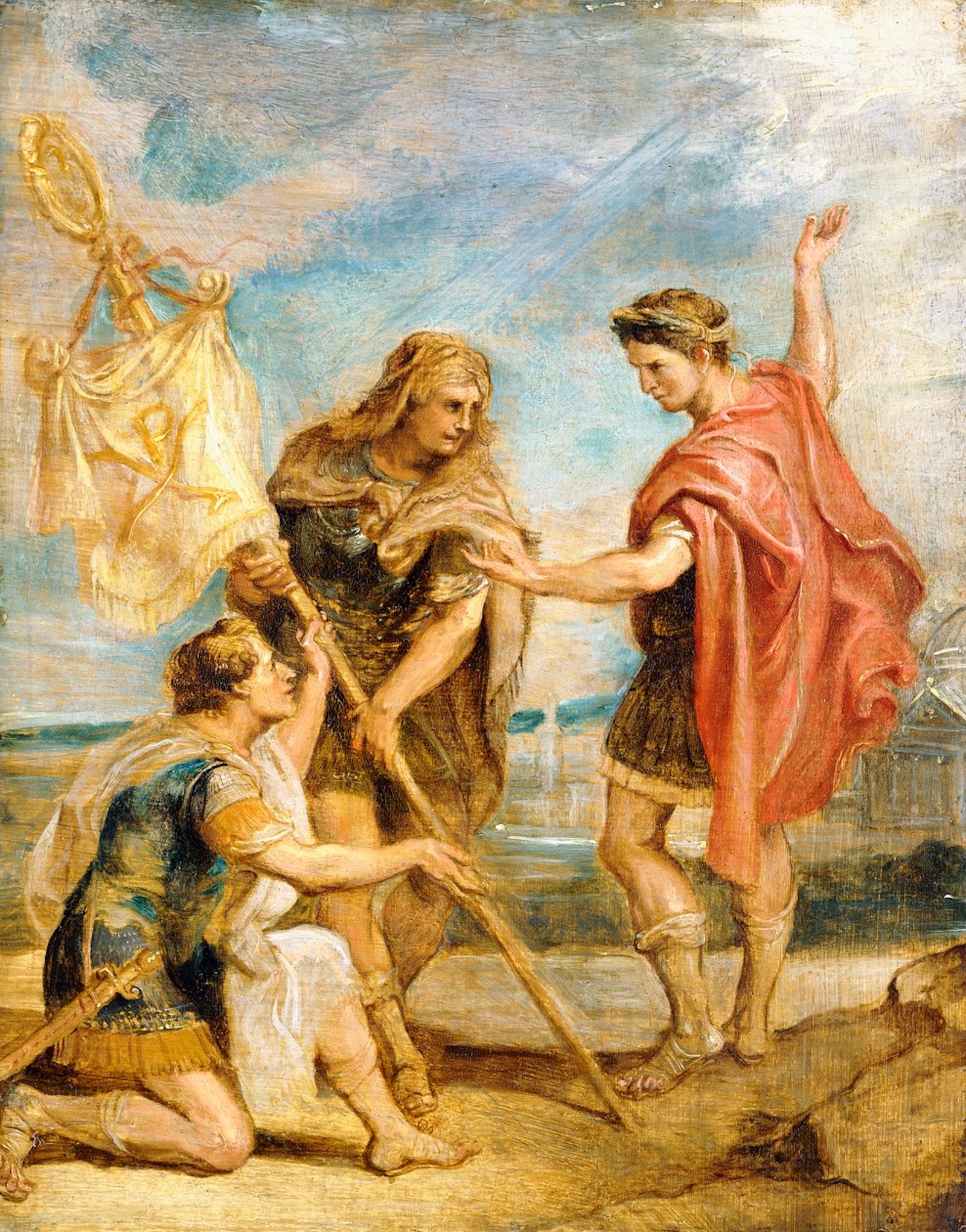
The first written elaborations of the Order’s legendary early history emerged in the later context of the Fall of Byzantium (1453), the conquest of Rhodes (1522), and the collapse of Christian polities in the Balkans. In this period of renewed reflection upon the Christian inheritance, the claim arose that the Order was the direct successor to the guard of the labarum of Emperor Constantine the Great (*270 or 288; †337). This narrative placed the Order in immediate continuity with the Constantinian legacy and served to legitimise it as the guardian of the most ancient Christian knighthood.
The readiness to accept the legend of medieval knights of the labarum is explicable in light of the intellectual climate of the Renaissance. Humanists such as Annius of Viterbo, Philippus Bergomas, and later Alfonso Ceccarelli disseminated extensive pseudo-antique genealogies, foundations, and imperial lists that were widely believed. Against this background, the Order’s own origin myths appeared by no means exceptional; rather, they conformed to a broader contemporary tendency to legitimise institutions through recourse to ancient or early Christian antecedents.
In strict historical terms, this foundation narrative must be regarded as a legend: it is not substantiated by contemporary sources but was constructed within the context of the revival of the Greek-Byzantine heritage following the fall of Constantinople. The historically verifiable Order begins with its documented emergence in the sixteenth century under the Angeli Comneni, while its institutional continuity is beyond doubt attested from 1699 onwards through papal documentation.
Symbolism and Spiritual Tradition
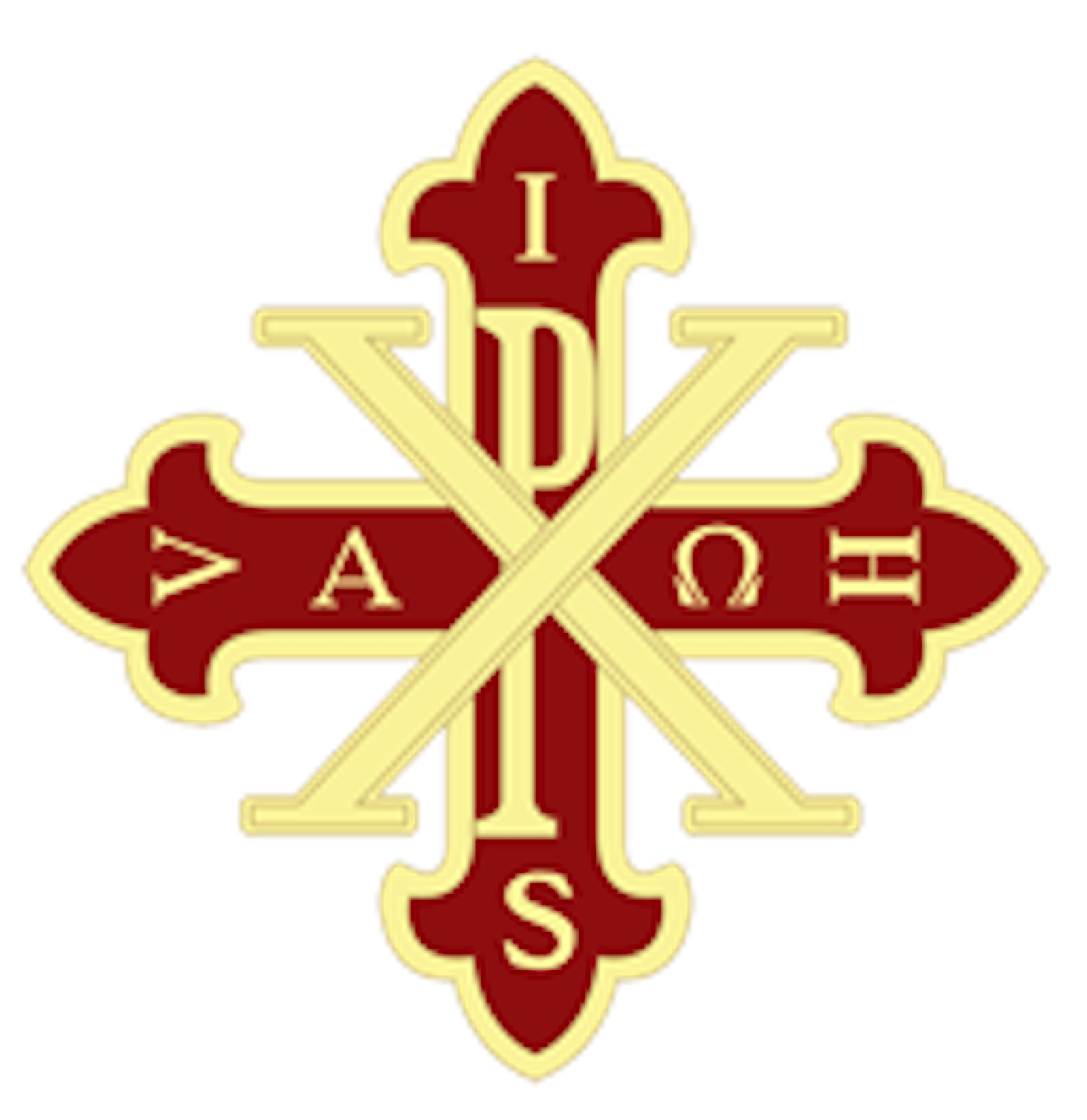
As an institution of the Roman Church, the Order also presents itself as an expression of a shared Christian tradition rooted in both the Eastern and Western spheres of Europe. This is reflected in its insignia: a Greek cross with fleur-de-lys terminals, bearing at its centre the Christogram, accompanied by Alpha and Omega and the letters IHSV—In Hoc Signo Vinces. While firmly situated within the Roman Church, the Order consciously understands itself as a bridge between Eastern and Western ecclesiastical traditions.
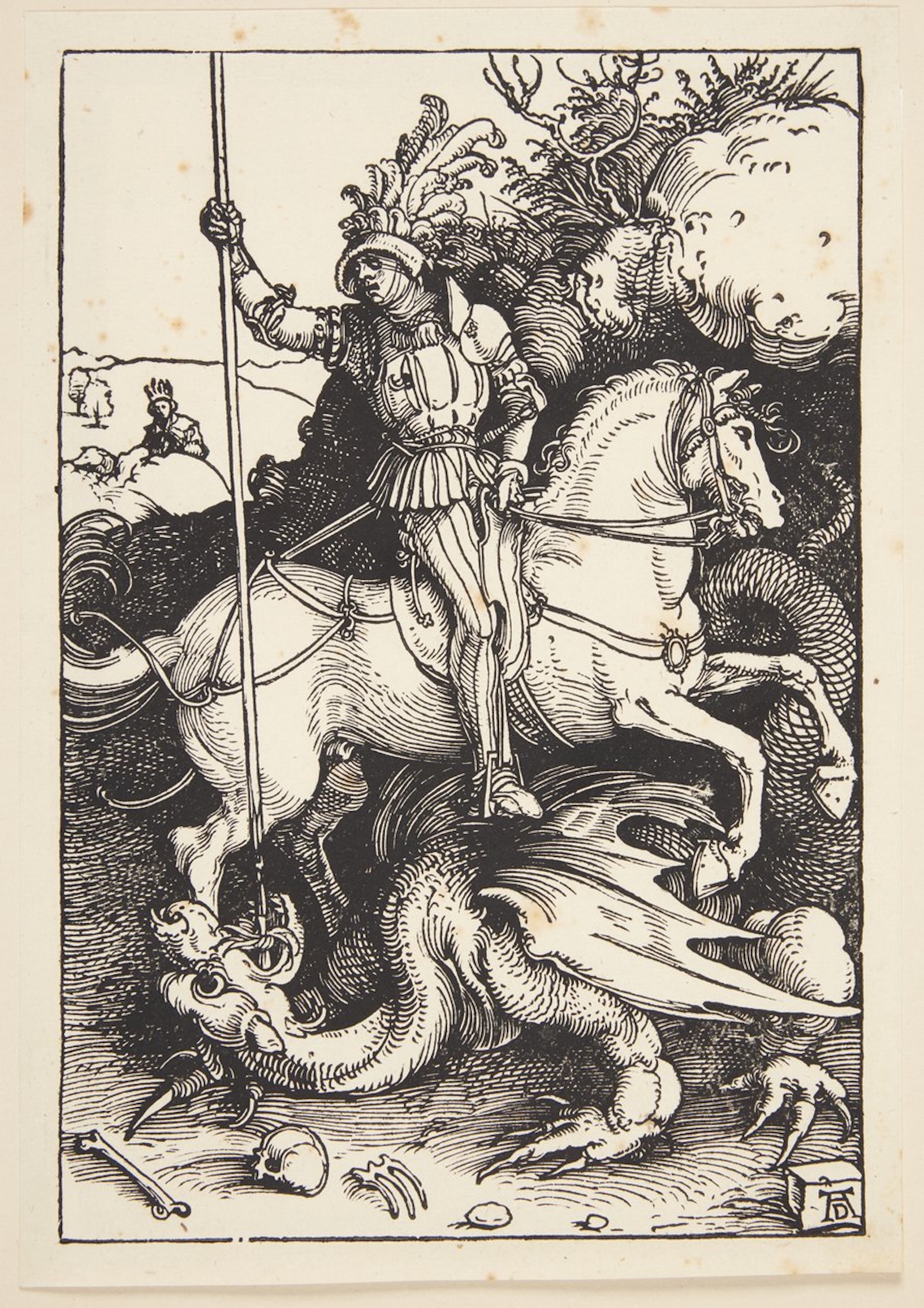
Saint George († c. 303), one of the most renowned martyrs of the early Church and especially venerated in the Eastern Churches, was chosen as the Order’s patron. His image as the dragon-slayer developed into one of the foremost symbols of chivalric courage in the service of the faith. The association with Saint George led to the adoption of the well-known motif of the combat with the dragon as a further emblem of the Order.
The adoption of the Rule of Saint Basil the Great (†379) likewise forms part of the Order’s spiritual foundations, linking it to the monastic and ecclesiastical traditions of the Christian East. This development belongs, however, to later phases in the Order’s evolution, the precise dating of which remains difficult.
The Order’s Mission Today
Today, the Order understands itself as a spiritual community of Knights and Dames acting in fidelity to the Church and in the spirit of Christian charity. Its members are called to promote the values of Christian civilisation, to support charitable works, and to foster the unity of Christians. The Order’s spiritual orientation is expressed through its chaplaincy and through regular liturgical celebrations that shape its communal life.
Thus, the Order presents itself not merely as a historical legacy, but as a living institution engaged with the challenges of the present. It maintains close relations with the Church and with other chivalric bodies, thereby continuing a tradition which—through all historical transformations—remains rooted in the ideals of early Christianity: courage, piety, and service.