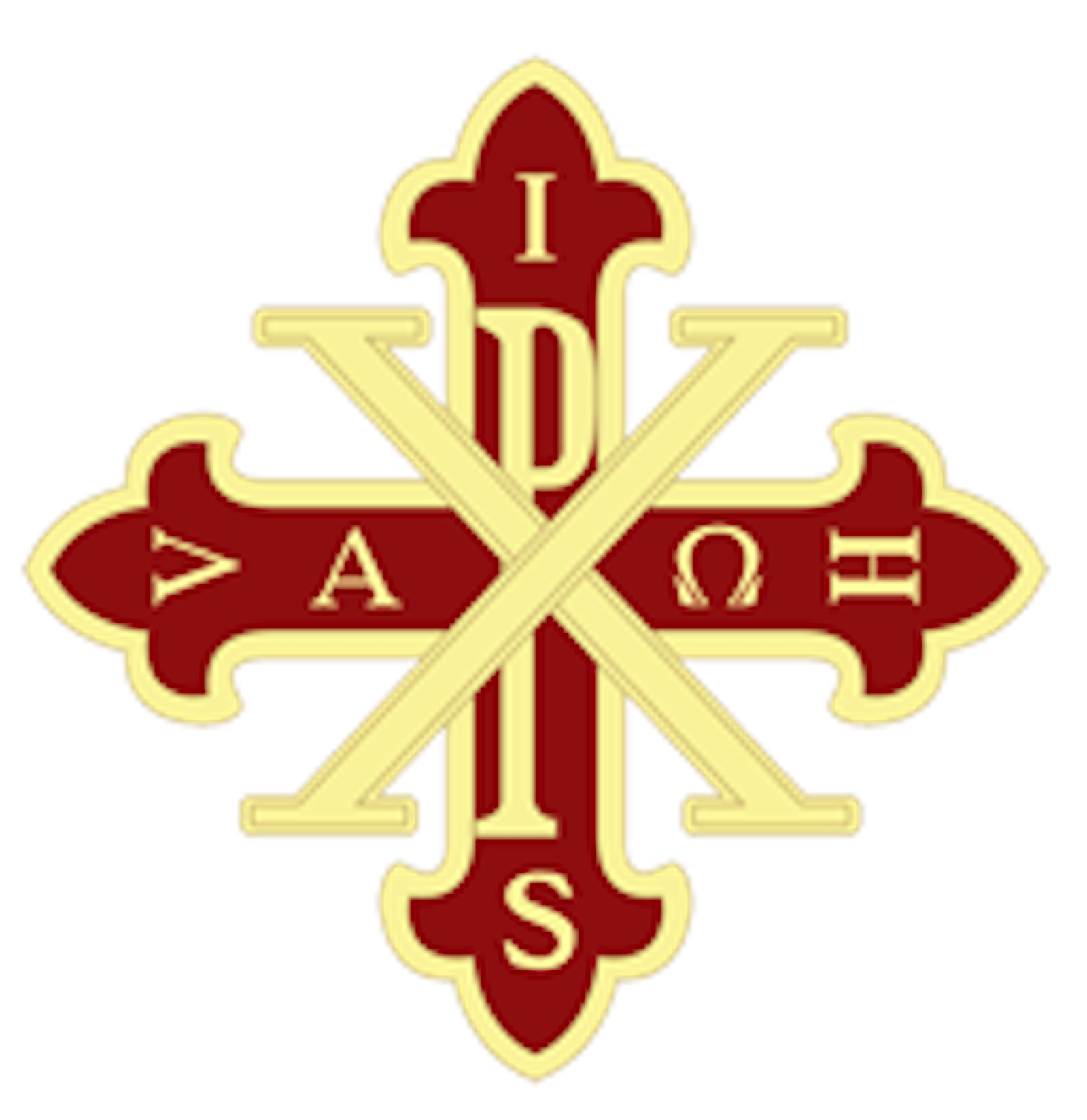
The Religious and Military Constantinian Order of Saint George
The Religious and Military Constantinian Order of Saint George conceives its vocation as one of service to the Christian faith, to the Church, and to one’s neighbour. In accordance with the tradition of a chivalric order, it unites the interior life of the spirit with active engagement on behalf of those in need, and with the defence and transmission of the Christian heritage.
The objects of the Order are set forth in its Statutes, promulgated in 1934, revised in 1943, and reaffirmed in 1968. Therein, its purpose is defined as the glorification of the Cross, the propagation of the Faith, and the defence of the Holy Roman Church. Although the Order no longer exercises military functions, it remains steadfastly committed to these same fundamental principles, now pursued by peaceful and charitable means.
Foremost amongst the Order’s present activities is the support of Christians who suffer persecution or discrimination on account of their faith, or as a consequence of restrictions upon religious liberty. The Order further undertakes works of a social and humanitarian character, lends its support to charitable initiatives, and provides assistance to those in conditions of hardship, including the poor and the destitute.
In conformity with this animating spirit, the Order promotes the formation of future clergy through the provision of scholarships for seminarians in Italy and Spain, and has contributed substantially to the construction of a seminary in Mali. It has likewise rendered humanitarian assistance to Christian communities in the Near East, provided relief to the victims of natural disasters — most notably in the aftermath of the earthquakes in Italy — and, since 2022, has participated in relief operations for Ukraine, including the provision of specialised medical equipment.
The Order maintains close relations with the Holy See. The Grand Master and delegations of the Order have, on numerous occasions, been received in private audience by His Holiness Pope John Paul II, His Holiness Pope Benedict XVI, and His Holiness Pope Francis. Papal delegates and Apostolic Nuncios likewise take part regularly in the ceremonies, investitures, and undertakings of the Order.
The members of the Order profess their adherence to the Catholic, Apostolic and Roman Church, and are called to exemplify the virtues proper to the Christian knight: fidelity in faith, readiness in service, and devotion to the common good. A recent reform has made it possible for the Constantinian Cross to be conferred upon non-Catholics as an honorary distinction; full membership as a Knight or Dame of the Order, however, remains reserved to those of the Catholic faith.
The development of the Order in the early twentieth century — furthered by the appointment of three Cardinal Protectors by His Holiness Pope Pius X and His Holiness Pope Benedict XV, and by the endowment of several churches — marked the commencement of a period of notable international expansion. The Order aspires to embody the faith which inspired Constantine the Great to extend religious toleration and to embrace Christianity, and which sustained the faithful through long centuries of persecution.
The present mission of the Order consists in the practical pursuit of its historic objects in an age increasingly inimical to religious life. This entails, above all, resistance to those forces — whether governmental or private — which continue to persecute the followers of Christ, whether through physical violence or through legal constraints upon freedom of conscience and religion.
The Order does not pursue a specifically hospitaller vocation; nevertheless, it supports hospitaller undertakings and renders assistance to those in need. Its Knights and Dames are bound by a particular obedience to the Supreme Pontiff and to the preservation of Catholic doctrine and tradition. In its ceremonial observances, the Order upholds the dignity of the liturgy. It is an exclusively Roman Catholic dynastic Order, recognised as such by the Holy See, although the Cross of the Order has on occasion been conferred upon certain persons of the Orthodox faith, in keeping with the Order’s historic connexion with the Byzantine heritage.
The Order presently numbers approximately three thousand five hundred Knights and Dames, the greater part drawn from Italy and Spain — a distribution reflective of that which obtained in the later sixteenth and seventeenth centuries. As in earlier times, members are also to be found in Austria, Germany, Poland, and Portugal, as well as in France, Great Britain, Luxembourg, Ireland, Belgium, Hungary, the Netherlands, Sweden, Switzerland, Serbia, and Russia, and throughout Central, North and South America, Australia, and Japan.
The Order regards itself as a neutral and apolitical institution of a chivalric and religious character, animated by charity: the support of those threatened by poverty, exclusion, war, or religious persecution, and the promotion of culture in both its material and immaterial dimensions. It may aptly be described as an Order of persons for persons: its Grand Master visits the national commissions throughout the world in person, conscious that his presence lends visible strength and encouragement to their charitable endeavours.
The Order is a living spiritual institution, bearing the inheritance of Christian civilisation into the present age — a witness to the enduring truth that genuine chivalry resides not in the bearing of arms, but in the rendering of service; not in the exercise of power, but in the practice of humility. Under the leadership of the present Grand Master, His Royal Highness Prince Don Pedro of Bourbon-Two Sicilies and Orléans, Duke of Calabria, Count of Caserta, the Order reaffirms its objects and continues its mission unceasingly: in the service of faith, of the Church, and of mankind, sustained by the tradition of Christian chivalry and of charity in its most active expression.