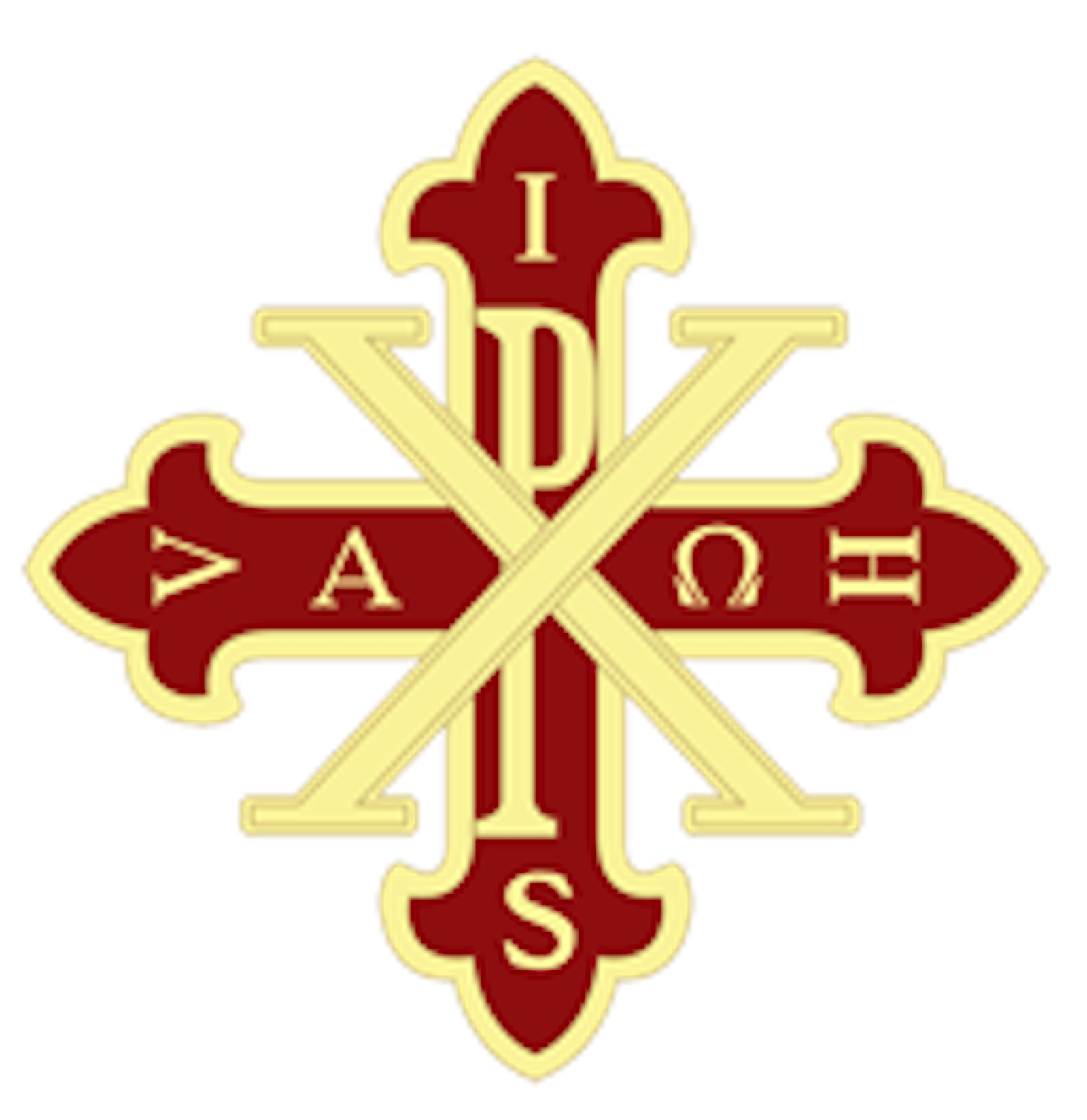
The Grand Priorate
The Nature and Theological Significance of the Office
The Grand Priorate (Lat. Grand Priorate, Ital. Gran Priorato) is the highest ecclesiastical office within the Constantinian Order (S.M.O.C.S.G.). It embodies in its person the indissoluble bond between chivalric tradition and ecclesial mission that has characterised the Order throughout its assured institutional history. In an Order that is by its very nature both military and religious — its full title making this twofold character explicit — the Grand Prior fulfils a structurally indispensable rôle: he represents the ecclesial pole of this dual institution and stands thereby in a complementary relationship to the Grand Master, who holds the dynastic and temporal governance of the Order.
The Statutes of the Order set forth this division of authority with admirable clarity: the Grand Master leads the Order in its external affairs, directs its temporal concerns and embodies its dynastic continuity; the Grand Prior, by contrast, bears responsibility for the spiritual life of the Order’s members, the celebration of liturgical functions and the safeguarding of the Order’s religious identity. This functional division has proved its worth over the centuries and enables the Order to be held in esteem both in dynastic and in ecclesiastical circles.
The first historically attested record of the Order as an institution dates from the year 1190, when the Byzantine Emperor Isaac II Angelos confirmed it by charter. In the Byzantine tradition of Christianity, the fusion of imperial and religious authority — the so-called Caesaropapist model — was structurally embedded, such that even in this period no sharp distinction between the temporal and spiritual governance of the Order obtained. The first significant papal confirmation was granted by Pope Julius III through the Bull Quod alias of 1551. Pope Sixtus V, in 1585, explicitly recognised the Order’s character as a religio by means of the Brief Cum sicut accepimus — a canonical category that qualified it as a chivalric-religious community within the Church. This papal recognition simultaneously underscored the necessity of a spiritual governing authority within the Order, which in later centuries was to be systematically institutionalised as the Grand Priorate.
The Bull Militantis Ecclesiae
The decisive institutional turning-point was brought about by the transfer of the Grand Mastership to the House of Farnese in the years 1697–1699. Pope Innocent XII approved this transfer on 24 October 1699 by means of the apostolic Brief Sincerae Fidei; Pope Clement XI confirmed it anew in 1701. In 1705, Grand Master Francesco Farnese undertook a fundamental reform of the Order’s Statutes; in 1706 these received the approbation of the Holy See. The decisive legal foundation was provided by the papal Bull Militantis Ecclesiae, promulgated by Pope Clement XI on 27 May 1718. This Bull placed the Order formally under papal protection, confirmed its privileges, and directed, amongst other provisions, the appointment of a Cardinal Protector by the Holy See. This Cardinal Protector was intended to secure the Order’s ecclesial embeddedness on a permanent footing — and from this office there developed, in the course of time, the institutional connection that was later to find its clearest expression in the Grand Priorate. The Statutes of 1705/1706, confirmed in their revised form in 1718 and carried forward in the later versions of 1919, 1934, 1943, 1987 and 2006, regulated the relationship between the temporal Grand Master and the spiritual Grand Prior with ever-greater precision.
The Grand Priorate in the Statutes of the Order
The current Statutes of the Order (in the version adopted at Cannes on 20 July 1934, amended on 16 July 1943 and on 31 October 1987 and 31 October 2006) contain in Chapter V, Article III and Chapter VII, Article III the authoritative provisions governing the Grand Priorate.
Chapter V, Article III provides: “According to custom, the Grand Master shall petition the Holy Father to appoint an Ecclesiastical Counsellor to the Order, who, as Grand Prior, shall represent the bonds of traditional, filial devotion that the Military Order has ever maintained with the Church.”
This formulation is remarkable in several respects. It makes plain, firstly, that the Grand Prior is not appointed by the Grand Master alone, but is designated by the Holy Father at the Grand Master’s petition — a provision that confers upon the office a particular ecclesial character and elevates it above the purely internal hierarchy of the Order. Secondly, it anchors the office in tradition: the Grand Prior represents the “bonds of traditional, filial devotion” that unite the Order with the Church — a theologically dense expression, giving voice to the spiritual submission of the Military Order to the maternal authority of the Church.
Chapter VII, Article III specifies the duties of the office: “The Grand Prior, Ecclesiastical Counsellor to the Deputation, exercises spiritual oversight over the Order and direct supervision over the Chaplains. He shall be chosen from amongst the most eminent clergy of the Order, and if he does not already hold the Grand Cross, it shall be conferred upon him at his appointment as Grand Prior.” It is further provided that, in the event of the Grand Prior’s absence or incapacity, one of the Vice-Grand Priors shall assume his responsibilities. Chapter IX affirms that the sacred functions of the Order are to be determined by the Grand Prior “in accord with the Deputation and with the consent of the Grand Master.”
The office of Grand Prior is thus organically integrated into the structure of the Royal Deputation. He is by virtue of his office the “Ecclesiastical Counsellor to the Deputation” and serves therein in the Church Council. At the same time, his authority in spiritual matters is independent and not merely advisory in character.
The Duties and Functions of the Grand Prior
The duties of the Grand Prior may be grouped under five principal headings:
Spiritual oversight of the Order. The Grand Prior bears overall responsibility for the religious life of the Order’s community. He ensures that the Order remains faithful to its self-understanding as a chivalric-religious institution and fosters the spiritual growth of its members. This includes the promotion of a life of prayer, sacramental practice, and the relationship with the Church at every level of the Order’s life.
Supervision of the Chaplains. The Grand Prior is the immediate superior of the Order’s Chaplains — those priests, that is to say, who are associated with the Order in its liturgical and pastoral service. He coordinates their deployment, oversees their suitability and serves as the point of reference for questions of the Order’s divine worship at both national and international level. The Statutes also provide for the possibility that the Presidents of the national Commissions may, with the consent of the Grand Master, appoint a Principal Chaplain for their respective nation, who assists the Grand Prior or the Vice-Grand Priors in their duties.
Ordering of the sacred functions. The liturgical life of the Order — the Order’s Masses, investitures, commemorations, processions and other religious observances — is determined and directed by the Grand Prior in accord with the Deputation and with the consent of the Grand Master. He is thus the liturgical architect of the Order’s life and lends to the Order its spiritual countenance before the public.
Membership of the Church Council and the Deputation. As Ecclesiastical Counsellor to the Deputation, the Grand Prior participates in the highest governing body of the Order. He counsels the Deputation in all matters touching the spiritual life and ecclesial standing of the Order and is thereby not merely a pastor but also a co-shaper of the Order’s policy.
Representation of the Order before the Church. In his person, the Grand Prior embodies the institutional bond between the Order and the Holy See. He cultivates the Order’s relationships with the Church at every level, participates in ecclesiastical events and is both witness and guarantor of the Order’s ecclesial grounding. In times of dynastic controversy — such as the dispute between the Calabria Line and the Castro Line following 1960 — this representative function assumes particular importance, since the Holy See’s recognition of the Grand Prior constitutes a significant indirect signal as to the legitimacy of the respective leadership of the Order.
The Grand Priorate within the Order’s Hierarchy
Within the Order’s order of precedence, the Grand Prior occupies a singular position. He is one of the Grand Officers of the Order and ranks after the Grand Prefect and the Honorary President of the Royal Deputation, but before the Vice-Grand Prefect and the Grand Chancellor. This hierarchical standing reflects the importance accorded to the spiritual dimension within the overall structure of the Order. At the same time, the Grand Prior is one of the few persons who attain their rank not by appointment on the part of the Grand Master alone, but whose designation — according to the Statutes — requires the Grand Master’s petition to the Holy Father. This particular mode of appointment renders the Grand Priorate a hinge between two poles of authority: the dynastic authority of the Grand Master and the ecclesial authority of the Pope. Should the office not be conferred together with the Grand Cross upon its holder — which is in practice never the case with eminent Churchmen such as Cardinals, since these are amply worthy of the Order’s highest dignities — it is conferred upon him by virtue of his appointment as Grand Prior. The Grand Prior is thus always a bearer of the Order’s highest decoration, which underscores his protocolar and symbolic standing within the Order.
The Grand Priors since the Foundation of the Order
The reconstruction of a complete and unbroken chronology of the Grand Priors of the Constantinian Order is, from the sources available, possible only for those historical epochs that are historically secure. For the earlier centuries, and in particular the phase of the Angeli Comneni in the 15th through 17th centuries, the ecclesiastical dignitaries who exercised spiritual supervisory functions are transmitted only in fragmentary form. The position of an independent Grand Prior, clearly defined in institutional terms, emerges distinctly with the papally confirmed reform of 1699–1718 and above all with the Statutes of 1705/1706. For the period prior to this, the clergy responsible within the Order are known by name only in rare instances.
The Period of the Angeli Comneni (15th–17th centuries)
In this period, the spiritual leadership of the Order was closely bound up with the Grand Mastership of the Angeli Comneni family. Independent Grand Priors in the institutional sense cannot be attested by name from the sources. The spiritual accompaniment of the Order was ordinarily entrusted to senior clergy in the circle of the Order’s founding families and to the successive papal Protectors of the Order.
The Period of the House of Farnese (1699–1731)
N.N. (c. 1705–1731): With the Statutes of 1705 and their papal approbation in 1706, the office of Grand Prior was for the first time codified. The first Grand Prior of this era known by name has not been definitively identified in the generally accessible sources; senior Neapolitan or Roman clergy performed this function in the entourage of the Duke of Parma.
The Period of the House of Bourbon-Two Sicilies (1731 to the present)
With the transfer of the Grand Mastership to Charles of Bourbon in 1731 and especially following the foundation of the Kingdom of Naples in 1734, the Order developed a rich institutional tradition. The Grand Priors were now drawn as a rule from the Neapolitan clergy and were summoned from the highest ranks of the Church of Southern Italy and Rome. Set out below are those Grand Priors known and documented through the Order’s literature, insofar as they are reconstructable from the available sources.
The Present Grand Prior: Gerhard Ludwig Cardinal Müller
Since the 1980s, the Order has reinforced its ecclesial orientation through the appointment of eminent prelates as Grand Priors and spiritual dignitaries. With Archbishop Bruno Heim, a distinguished Churchman was appointed Grand Prior in 1986, followed by further prominent prelates such as Archbishop Custodio Alvim Pereira, Monsignor Arrighi and, finally, Cardinal Mario Pompedda. Following Heim’s death, Cardinal Antonio Innocenti and subsequently Cardinal Darío Castrillón Hoyos assumed the spiritual leadership of the Order. These clergy — many possessed of diplomatic or curial experience — strengthened the ecclesial presence and lent to the Order’s activities a high moral authority. Numerous further Cardinals, Archbishops and Bishops have joined the Order. Amongst these were found leading Churchmen of Spain, Italy, Poland, Latin America and Africa. They regularly celebrated Pontifical Masses, led pilgrimages, assumed pastoral responsibilities within the national Commissions and supported the charitable and liturgical obligations of the Order.
The reigning Grand Prior of the Order is Gerhard Ludwig Cardinal Müller (b. 1947 in Mainz). Cardinal Müller served from 2012 to 2017 as Prefect of the Congregation for the Doctrine of the Faith (now the Dicastery for the Doctrine of the Faith) and is thus numbered amongst the most distinguished theologians and canonists of the present pontificate. He is an acknowledged authority on the Church’s doctrinal tradition and has distinguished himself as a theologian particularly through his works in Christology and Ecclesiology.
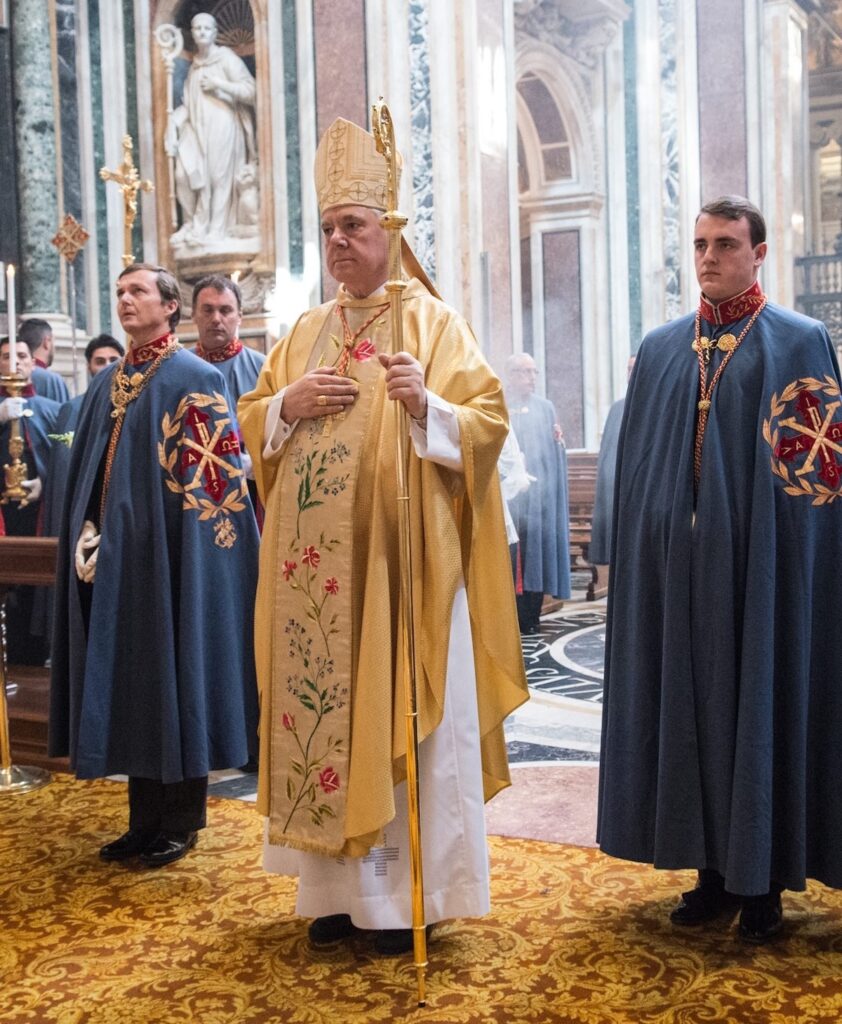
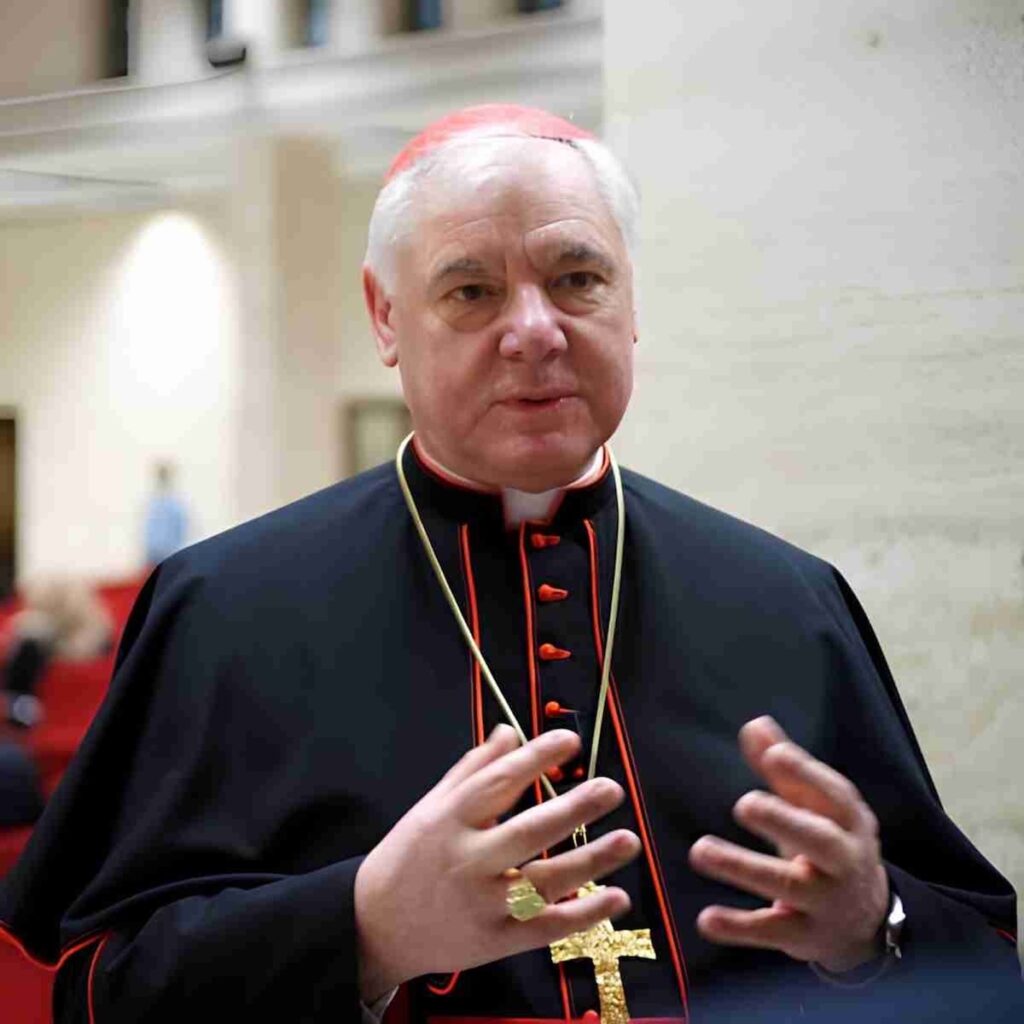
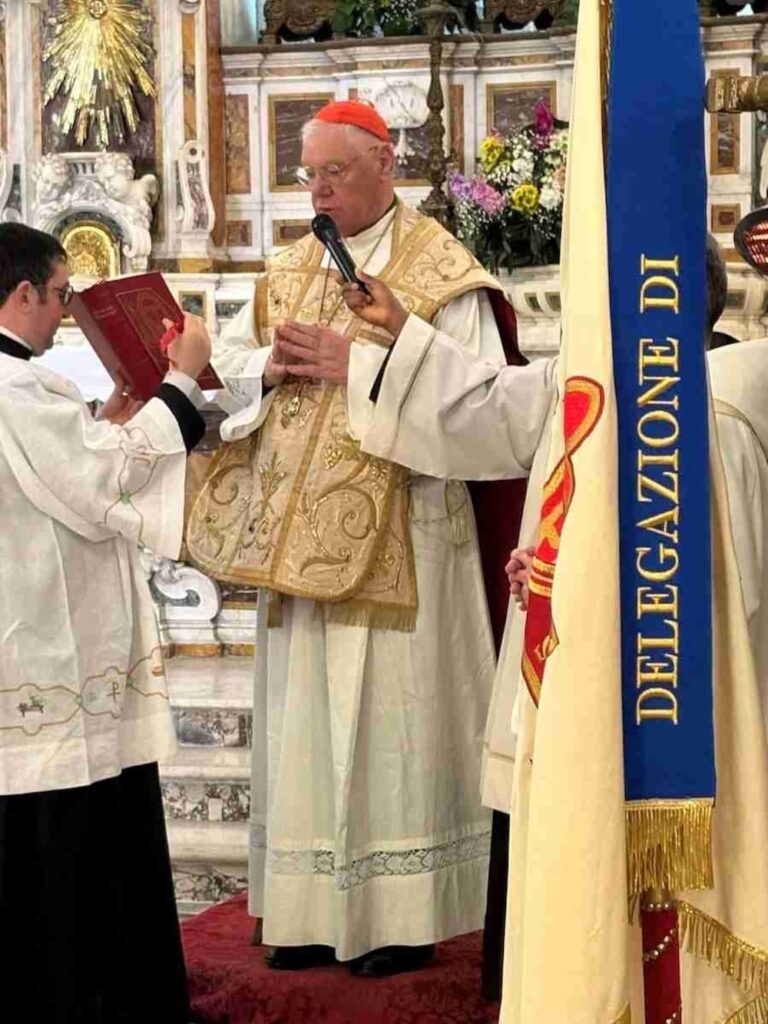
As Grand Prior, Cardinal Müller simultaneously exercises in the present structure of the Order the function of Ecclesiastical Counsellor within the Royal Deputation. In this capacity, he is a member of the Order’s supreme governing body under the presidency of the Grand Master H.R.H. Prince Don Pedro of Bourbon-Two Sicilies, Duke of Calabria. The appointment of an emeritus Prefect of the Congregation for the Doctrine of the Faith to this office underscores the Order’s claim to represent the ecclesial dimension of its mission at the highest theological and canonical level.
Since the death of Ferdinando Pio of Bourbon-Two Sicilies in 1960, the Grand Priorate has assumed a particular legitimating significance. The Holy See, which by tradition does not issue formal judgements in dynastic disputes, has nevertheless oriented its institutional practice predominantly towards the Calabria Line: papal correspondence, private audiences and ecclesial collaboration in charitable and religious initiatives have, it is understood, been conducted predominantly with this Line. The fact that Cardinal Müller, as Grand Prior of the Calabria Line, is a senior cleric of the Holy See, lends to this Line of the Order additional ecclesial weight.
Concluding Reflections: The Grand Priorate as the Spiritual Heart of the Order
The Grand Priorate embodies that which distinguishes the Constantinian Order from merely temporal noble associations: its indissoluble rootedness in the Church and in the Christian tradition of faith. In an age in which chivalric orders are in many quarters reduced to representative and social functions, the Grand Priorate keeps alive the memory that the Order is by its very nature a religio — a religious community that stands under the sign of the Cross and is bound in service to God and to mankind.
From the legendary origin in the Vision of Constantine the Great, through the papal institutionalisation under Clement XI, to the present day under Grand Master Prince Don Pedro and Grand Prior Cardinal Müller, a continuous thread runs through the history of the office: the conviction that military valour, political power and social engagement attain their full dignity only when they are lived in the light of faith. The Grand Priorate is the institutional guardian of this conviction.