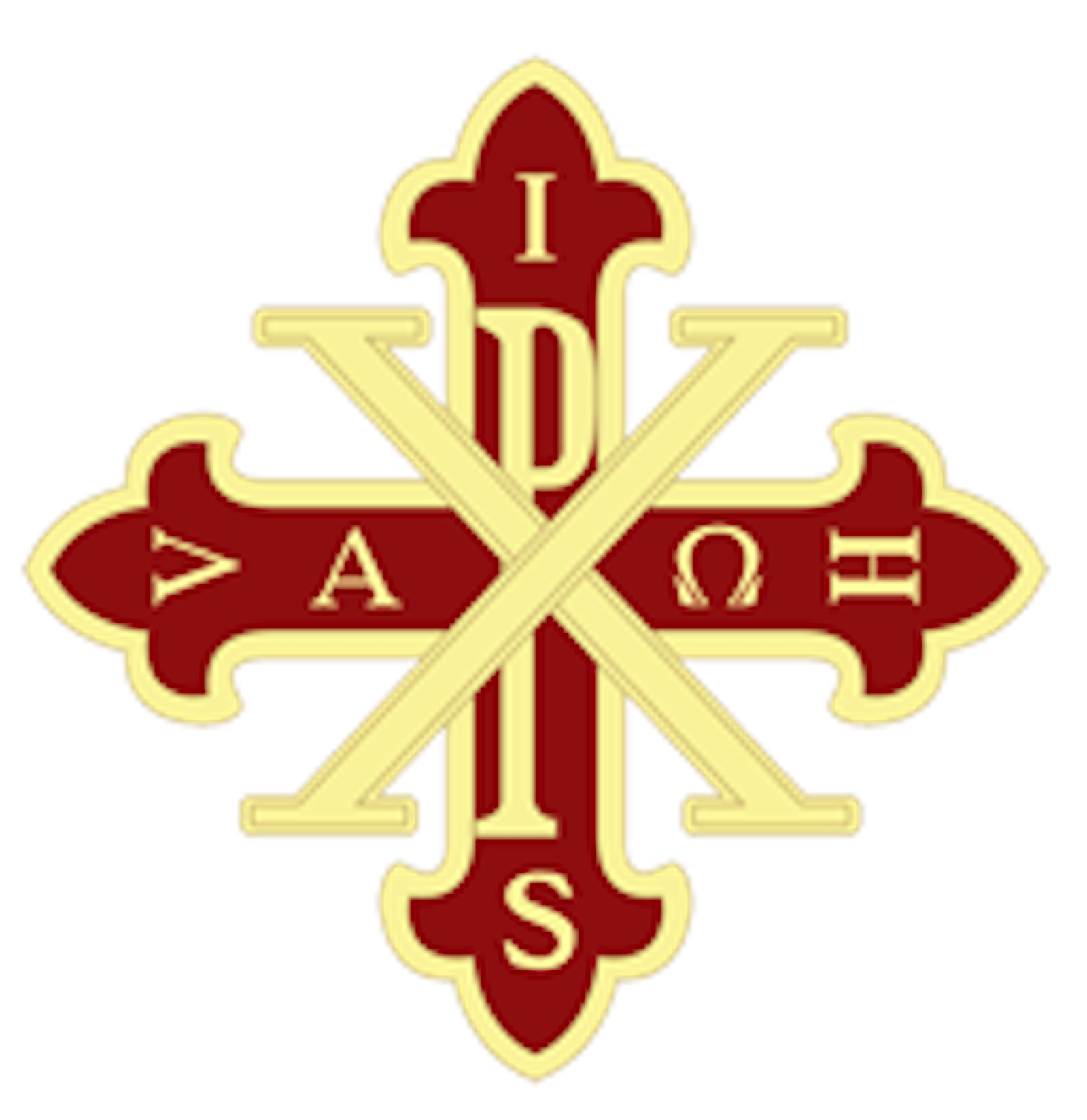
The Order after 1960
Upon the death of Prince Ferdinando Pio in the year 1960, the dynastic history of the House of Bourbon-Two Sicilies entered upon a new phase — a phase defined by a dispute as to legitimacy, the legal roots whereof reach deep into the foundations of European dynastic order. The question of the lawful headship of the Order came thereafter to occupy the centre of a controversy that touches upon far more than dynastic honour: it concerns the substance of privileges conferred by canon law, the continuing force of papal bulls, and the immutable logic of historical seniority. Two branches have since advanced claims to the headship of the House and the Grand Mastership of the Order — the Calabria branch and the Castro branch. A dispassionate analysis of the historical sources, of the dynastic house law, and of ecclesiastical practice leads, however, to an unequivocal conclusion: the institutional continuity of the Order resides in the Calabria branch, which alone unites within itself the genealogical seniority, the legal order, and the long-established recognition by the Holy See.
The legal foundation of the Constantinian Order was laid at the close of the seventeenth century by a series of papal bulls, by which the Holy See permanently united the Grand Mastership with the headship of the House of Farnese. The papal formulation is of unambiguous clarity: Magisterium Ordinis Sancti Georgii Constantiniani perpetuo cum domo Farnesia coniungimus. This union was not of a temporary but of a constitutive nature — it created a legal unity of dynastic headship and governance of the Order, which thenceforth was to be regarded as indissoluble. When the House of Farnese became extinct in the eighteenth century, the House of Bourbon-Two Sicilies succeeded by dynastic inheritance to all the dignities therewith associated. It is the senior line of that House — the Calabria branch — which today embodies that succession without interruption.
The Dynastic House Law and the Seniority of the Calabria Branch
The dynastic house law of the House of Bourbon-Two Sicilies admits of no ambiguity in the matter of succession: the principle of agnatic primogeniture governs the order of precedence within the House. The Calabria branch derives from the elder line and has therefore at all times held the rank of senior branch. This genealogical priority is not the product of interpretation but a historical fact established beyond doubt by genealogical tables, orders of primogeniture, and dynastic documents. The house laws of the Bourbons were deliberately so framed as to preserve the unity of dynastic headship and governance of the Order — a principle which, in the event of a division, must always be construed in favour of the senior line.
The Acte de Cannes and Its Legal Limits
At the centre of the Castro argument stands the so-called Acte de Cannes of 1900, in which Prince Carlos of Bourbon-Two Sicilies, in connexion with his marriage to the Spanish heiress presumptive, renounced certain rights. The Castro branch construes this instrument as a comprehensive and permanent renunciation of all dynastic rights, including the headship of the House and the governance of the Order. This construction does not withstand juridical scrutiny. Dynastic renunciations are, in accordance with the established principles of dynastic law, always to be construed strictly. They take effect only to the extent expressly declared — and not beyond. The Acte de Cannes was a political concession made in a specific historical conjuncture; it was directed at particular rights of succession to the throne that might have arisen from the connexion with the Spanish royal house. This document contained no renunciation — whether in terms or in purpose — of the headship of his own House or of the Grand Mastership of the Order inseparably connected therewith. The representatives of the Castro branch have produced no historical source capable of sustaining so extensive an interpretation. Their claim rests accordingly upon a construction of the document, not upon a well-founded legal position.
The Vatican Practice as Institutional Evidence
Papal diplomacy has at all times been at pains to avoid formal pronouncements upon dynastic disputes. Nevertheless, the long-term ecclesiastical practice towards the competing branches of the Order constitutes evidence of considerable institutional weight. The cooperation of the Holy See was conducted over the course of decades predominantly with the Calabria branch: ceremonies of the Order were honoured by senior representatives of the Vatican, the leadership of the Order was received in papal audience, and the charitable and religious initiatives of the Calabria branch received ecclesiastical support and recognition. This practice is no accident but the expression of an institutional assessment. When the Holy See cooperates consistently over decades with the Calabria branch, it thereby affirms in substance that branch’s standing as the legitimate representative of the historical Order. Informal signals of this nature have throughout the history of ecclesiastical diplomacy always exercised normative force — and they do so equally in the present case.
The Dual Structure of the Order and Its Preservation by the Calabria Branch
The Constantinian Order unites within itself two levels of governance: the Grand Master as the dynastic head, and the Grand Prior as the representative of the ecclesiastical dimension of the Order. This bipartite arrangement is no mere formal accident but the expression of the deeply rooted religio-chivalric nature of the institution, whose history derives alike from an imperial foundation legend and from papal privileges. The Calabria branch has preserved this dual structure in its historical form: it continues the statutes of the Order in their transmitted shape, adheres to the traditional ceremonies and forms of the Order’s life, and maintains the unity of the dynastic and ecclesiastical dimensions that have characterised the Order for centuries. The Castro branch, by contrast, is unable to demonstrate a comparable continuity of the Order’s structure and practice. Whosoever would continue the historical Order must bear not merely the name but the substance of the tradition — and that substance resides beyond doubt in the Calabria branch.
Conclusio Iuridica: The Sole Legitimate Bearer of the Order
A comprehensive review of the historical sources, the papal privileges, the dynastic house law, and the ecclesiastical practice leads to a conclusion that is clear in law as in history. The legitimacy of a dynastic order of chivalry rests upon three pillars: genealogical seniority, the institutional continuity of the Order’s structure, and long-term recognition by the competent ecclesiastical authorities. In all three dimensions, the Calabria branch alone affords conviction.
The genealogical seniority is a historical fact that can be displaced by no interpretation of the Acte de Cannes. The institutional continuity manifests itself in the faithful preservation of the statutes, structures, and traditions of the Order. The ecclesiastical recognition is made manifest in the decades-long cooperation of the Holy See with the Calabria branch.
Whosoever considers these three pillars in their entirety perceives: the Constantinian Order of Saint George lives to-day in the line of Calabria — in that line which history, law, and the Church alike designate as the legitimate bearer of this venerable chivalric tradition.